
You can schedule winter tree removal in Michigan, and frozen ground can work in a crew's favor by supporting heavy equipment and protecting the yard. The catch is the schedule, because snow, ice, and wind can delay a job until conditions are safe. If a tree may threaten people or property, call for an assessment right away rather than waiting until spring. The crew will determine when conditions are safe for removal.
If you've been putting off a removal, or you're not sure whether a tree can wait until spring, here's what helps in winter, what slows a job down, and how to tell a planned removal from an urgent hazard.
Frozen Ground and Bare Branches
The biggest advantage is the ground. Writing about logging in northern Michigan, Michigan State University Extension notes that moving heavy equipment can cause compaction and rutting in soft or wet soil, and that working on frozen or snow-covered ground may reduce or eliminate that damage. The same principle applies in a yard: a crew can bring equipment across ground that would rut in spring. The ground has to actually be frozen to help, though. A warm winter or a midwinter thaw can delay or undo that, which can change when heavy equipment can get onto a property.
Bare branches help too. Without leaves, a crew can see the full structure of the tree, including dead limbs and weak unions, which makes it easier to plan how to take it down in controlled sections. Martin Tree Service removes trees through the winter and its crews work in snow when conditions are safe.
Oaks are a special case. Late fall and winter are the safest window for oak work in Michigan, which our guide to winter oak pruning explains.
What Can Slow Winter Tree Removal
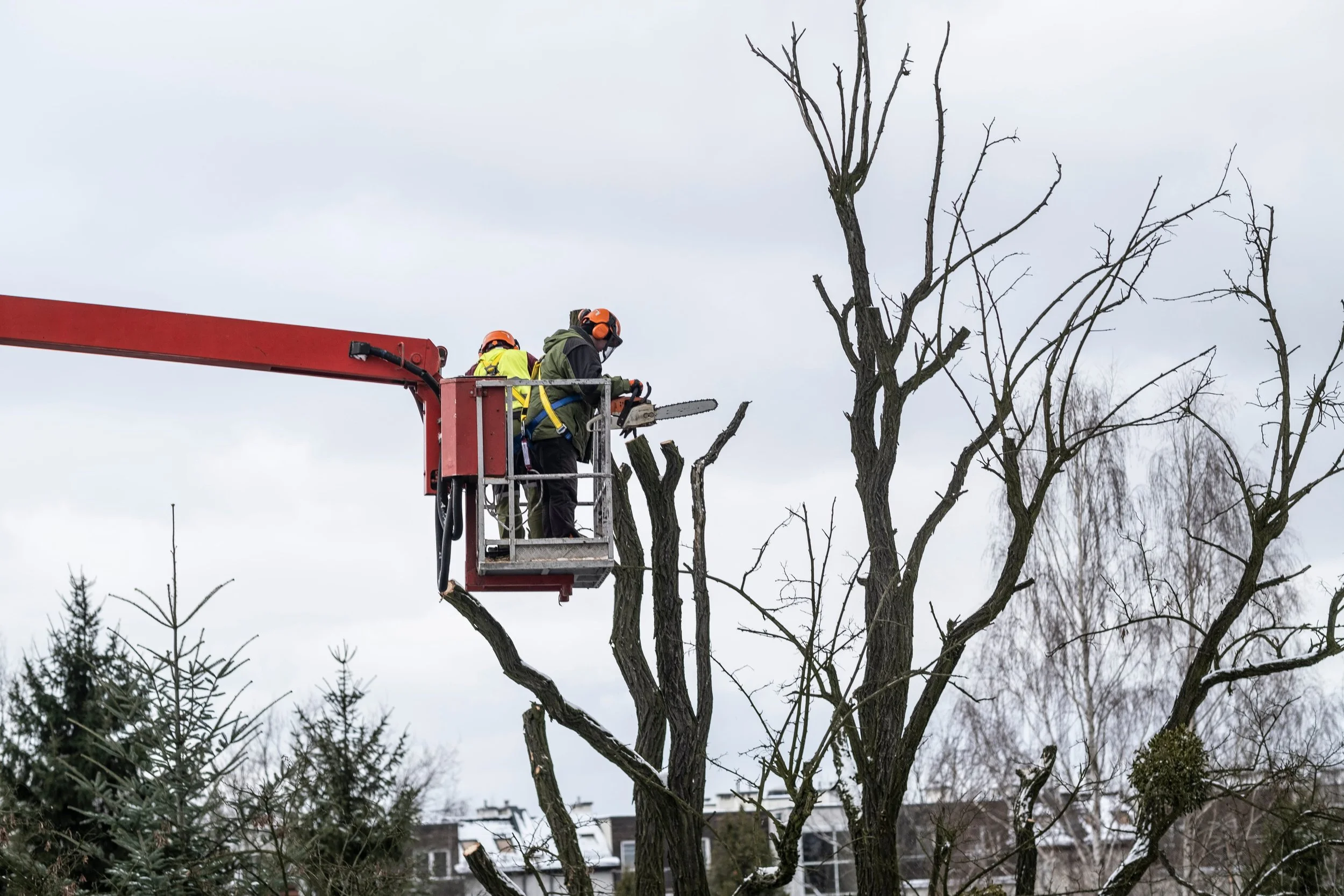
Ice is the biggest variable. The Michigan DNR says it takes only a quarter inch of ice to begin damaging trees, and Michigan State University Extension notes that an ice storm that coated trees with up to half an inch of ice weighed down branches and caused significant breakage, often high in the crown. A tree coated in ice is carrying extra weight, and limbs can be under stress that isn't visible from the ground. That's one reason a crew may wait for conditions to improve before starting.
Snow, short days, and thaws matter too. Deep snow can make it hard to reach a tree in a back corner of the yard, and shorter daylight leaves less working time, which can stretch a large job across more than one visit. A midwinter thaw can soften ground that was firm the week before. High wind can stop work in any season.
None of this makes winter a bad time to remove a tree. It means the schedule follows the conditions. Martin Tree Service's crews respond when conditions allow, and if weather pushes your job back, the team lets you know.
What Affects Scheduling Tree Removal in Winter
Emergency calls go first. Martin Tree Service prioritizes emergency jobs, so after a major storm a planned removal can move back while crews handle trees on houses and vehicles. What happens when you call for storm damage tree removal explains how those calls are handled.
Size and location come next. A large tree close to a house takes more time and more careful work than one in an open yard, and how long a removal takes depends on both. Weather and ground conditions do the rest.
A few details speed up an estimate. Note where the tree is, how close it sits to the house or other structures, and how a crew would reach it, since a gate, a slope, or deep snow can limit access in winter. Clearing vehicles and outdoor items from the area before the visit also helps.
Booking starts with a free on-site estimate. An estimator assesses the tree and the site, and the official quote arrives by text or email, with no obligation to accept it.
Planned Removal or Urgent Hazard?
Winter removals fall into two groups, and they run on different clocks. A planned removal is a tree you've decided to take out: one that's declining but not near anything, one crowding the house, or one you want gone to open up space or a view. Those can be booked around the weather.
One question helps sort a tree into a group: what could it hit? A declining tree in the middle of a large lot is a very different situation than the same tree leaning toward the house or a driveway. The closer a tree is to something that can be damaged, or someone who can be hurt, the less it should wait.
An urgent hazard is a different call. A dangerous tree can be too close to a home, leaning precariously, hollow on the inside, or holding suspended branches, and trees like that should come out before they can cause serious harm. After storm damage, the stakes are higher. Working around damaged trees is dangerous and often best left to professionals, according to Michigan State University Extension. If you're not sure which group a tree falls in, our ice storm guide covers what to check after a storm.
For an urgent hazard, call (517) 295-1155. Martin Tree Service offers 24-hour emergency tree removal.
Frequently Asked Questions
Can tree removal be done in the winter? Tree removal can be done in the winter. Martin Tree Service removes trees through the winter and its crews work in snow when conditions are safe. Frozen ground can protect your yard from ruts, and bare branches make a tree's structure easier to read. Heavy snow, ice, and high wind can delay a job, so the schedule follows the weather.
Does frozen ground make tree removal easier? Frozen ground often makes tree removal easier. Frozen soil supports heavy equipment and can reduce rutting and compaction, so a crew can work with less damage to the yard. The ground has to be frozen solid enough, though. Warm spells can delay frost or soften the ground, which can change when equipment can get onto your property.
Will snow or ice stop a tree removal? Snow or ice can delay a tree removal, depending on conditions. Ice, deep snow, and high wind can make it unsafe to start, and a crew may wait for conditions to improve. Martin Tree Service's crews respond when conditions allow, and the team lets you know if weather pushes your job back.
Should I wait until spring to remove a tree? You shouldn't wait until spring if the tree is a hazard. A tree that's too close to a home, leaning precariously, hollow, or holding suspended branches should come out before it can cause serious harm. If it's a planned removal, such as opening up space or a view, winter is a fine time to schedule it.
Does homeowners insurance cover tree removal after a storm? Homeowners insurance often covers removal when a storm drops a tree on a covered structure like your house, but coverage varies by policy. A tree that falls without hitting a structure is usually the homeowner's cost. Check your policy or ask your agent, and see our guide to the insurance process after a tree falls for how claims typically work.
Thinking about a removal before spring? Request a free estimate from Martin Tree Service in Brighton, Howell, Dexter, Pinckney, Fowlerville, Highland, Whitmore Lake, Hamburg, and Ann Arbor. For an urgent hazard, call (517) 295-1155 for 24-hour emergency tree removal.
