
When you call for storm damage tree removal, the first step is an emergency response to assess the damage and stabilize any hazards. From there, the crew removes the fallen trees and broken limbs and clears the debris. If a roof is damaged, temporary tarping can help limit further water damage until repairs can be made.
A tree on your house or across your driveway is a stressful way to start the day, and most people have never seen how a storm crew actually works. Here's what storm damage cleanup looks like from the first phone call, how the crew handles the hazard, how pricing works, and what to ask before you say yes.
What Happens First When You Call
Start by telling the team what you're looking at: where the tree is, what it's resting on (house, vehicle, driveway, fence), and whether anyone is hurt. If someone is injured, call 911 first.
If a tree is touching or near a power line, stay well away and contact your utility. If there are sparks, fire, or an immediate threat to someone’s safety, call 911 first. Never approach the tree or attempt to move debris.
Photos and a clear description over the phone help the team sort your call, which matters more than it might seem, because the next step depends on what kind of call it is.
Why Emergency Jobs Go First
After a big storm, the phones don't stop. Martin Tree Service offers 24-hour emergency service and prioritizes emergency jobs, putting in extra hours to remove the danger. In practice, that means a tree on a house or a vehicle comes ahead of a limb down in an open corner of the yard.
Weather also sets the pace. Crews respond when conditions allow, and active ice, lightning, or high wind can make it unsafe to start until they ease.
Several of our reviewers describe someone on site the same day or the day after a storm. Teresa Y., who had several large trees come down on her home, says the crew "responded quickly, professionally, and with a sense of urgency." That's their experience, not a guarantee. Arrival depends on conditions and how many calls are ahead of yours.
How the Crew Assesses and Removes a Storm-Damaged Tree
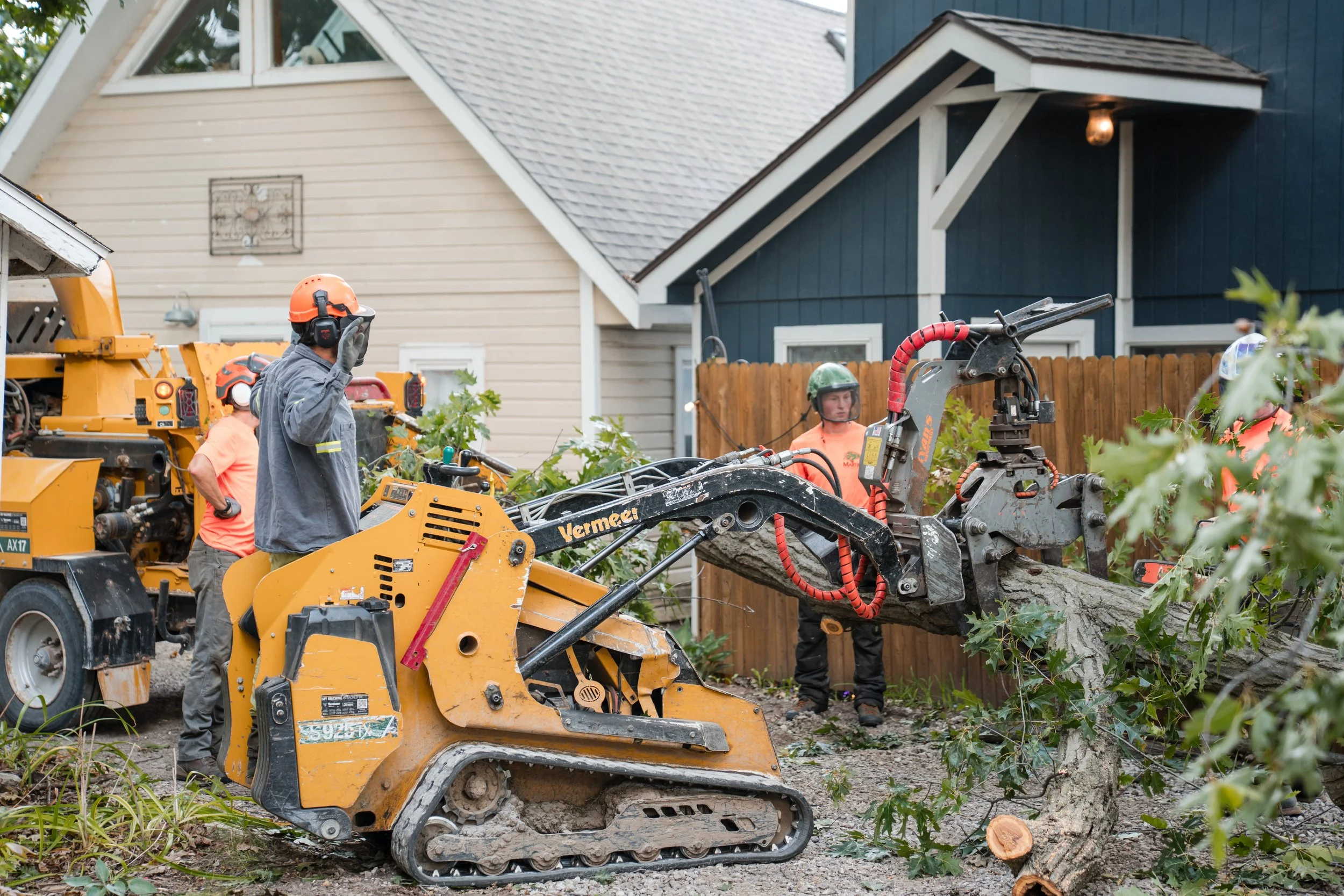
The first job on site is an emergency response to assess the damage and stabilize hazards. Before anything gets cut, the crew looks at what the tree is touching, what's hanging overhead, and where the weight is loaded.
That step matters because a storm-damaged tree can look still and still be under tension. Trees and branches that have been bent, twisted, or hung up during high wind can release with enough force to cause serious injury or death, according to the CDC, and even a branch as small as 2 inches in diameter can be dangerous when it lets go.
Rigging, bucket trucks, and crane work are how crews take a loaded limb or trunk down in controlled sections. Once the fallen tree and broken limbs are removed, debris is cleared from the site and disposed of properly.
Several reviewers mention cleanup and lawn protection. Mark H. says the crew "protected our lawn with boards" while removing storm-damaged trees, and Jeff and Kathy L. say the crew "took great care not to scar our front lawn" with its machinery.
What Happens When a Tree Is on Your House
A tree on a building is the situation most homeowners picture first. The priorities are getting people clear of the damage, removing the tree in controlled pieces, and limiting further harm. Martin Tree Service provides temporary roof tarping to help limit further water damage, and emergency tree removal covers the removal itself.
Stay out of the damaged area until the crew has assessed it. If you plan to file a claim, take photos from a safe distance before work begins. Our guide to the insurance process after a tree falls explains what insurers look for, including why many of them expect you to take reasonable steps to prevent further damage.
How Storm Damage Tree Removal Is Priced
Pricing comes down to three things: the size of the tree, how dangerous it is, and how close it sits to buildings or other property. Each one maps to the work involved. A larger tree takes more time and equipment, a more dangerous one calls for more careful rigging, and a tree close to a structure has to come down in controlled sections instead of being dropped.
An estimator assesses the job, often gives a price on site, and follows up with an official quote by text or email. Estimates are free, and you're under no obligation to accept the quote.
What to Ask Any Tree Service After a Storm
After a storm, you may be choosing between several crews on short notice, so ask a few questions before you agree to anything.
Are you insured? Always confirm liability coverage, no matter which company you hire. Martin Tree Service carries Commercial General Liability.
What does the quote include? Removal, debris cleanup, and any temporary roof protection should be spelled out.
How will you take the tree down? If it's over or against your house, ask how the crew plans to lower the weight safely.
What You Can Do While You Wait
Keep your family and pets away from damaged trees and broken limbs, and don't try to cut them down yourself. Each year, approximately 36,000 people are treated in hospital emergency departments for chain saw injuries, and the CDC says the risk rises after storms, when chain saws are widely used to remove fallen or partially fallen trees.
Take photos from a safe distance, note any damage to your home, vehicles, or fences, and make sure the crew can reach the tree. Our storm damaged tree cleanup checklist covers what to do in the first hour, in order.
Frequently Asked Questions
Do you offer emergency tree removal after a storm? Martin Tree Service offers emergency tree removal after a storm, with 24-hour service. When storms hit, crews prioritize emergency jobs and put in extra hours to remove the danger, including trees on houses and vehicles. Crews respond when conditions allow, since ice, lightning, and high wind can make it unsafe to start. Call (517) 295-1155 and describe what you're seeing so the team knows what you're dealing with.
What does storm damage tree cleanup include? Storm damage tree cleanup covers removal of fallen trees and broken limbs, an emergency response to assess damage and stabilize hazards, and debris removal and proper disposal. Martin Tree Service can also provide temporary roof tarping to help limit further water damage when it’s needed and safe to do so. Specialized equipment, including rigging, bucket trucks, and crane work when needed, keeps the removal controlled.
How much does storm damage tree removal cost? It depends on the size of the tree, how dangerous it is, and how close it is to buildings or other property. An estimator assesses the job and often gives a price on site, and an official quote is texted or emailed to the owner. Estimates are free, and there's no obligation to accept the final quote.
Is Martin Tree Service insured? Martin Tree Service carries Commercial General Liability coverage. Whichever company you hire for storm cleanup, confirm liability coverage before work starts, since the job involves large limbs, heavy equipment, and structures. Ask for proof of coverage if you want it on file, especially when the tree is over or against your home.
Do you serve my area? Martin Tree Service serves Livingston County and some surrounding areas, including Brighton, Howell, Dexter, Pinckney, Fowlerville, Highland, Whitmore Lake, Hamburg, and Ann Arbor. If you're not sure your address is covered, call (517) 295-1155 and the team will let you know whether they can get to you.
Storm damage on your property? Call (517) 295-1155 for 24-hour emergency service or request a free estimate from Martin Tree Service for storm damage cleanup in Brighton, Howell, Dexter, Pinckney, Fowlerville, Highland, Whitmore Lake, Hamburg, and Ann Arbor.
