

It's one of the first questions homeowners ask when they schedule a tree removal: how long is this actually going to take? The honest answer is that it depends on the job. A small dead tree in an open yard is a very different project than a large oak hanging over a roof. But most homeowners have no frame of reference for what "a few hours" or "a full day" actually means in practice.
Here's a straightforward breakdown of what affects tree removal time and what you can expect on the day of the job.
Most Removals Take Between Two Hours and a Full Day
For a single tree with good access and no major complications, most removals take between two and four hours from start to cleanup. Larger trees, tight access, or trees near structures can push that to a full day. Jobs involving multiple trees are typically quoted and scheduled as full-day work.
Those ranges assume the job was assessed in advance and the right equipment is on site. An emergency removal after a storm may take longer depending on conditions and complexity.
What Affects How Long It Takes
No two removals are exactly the same. These are the factors that have the biggest impact on the timeline.
Tree size. A small ornamental tree comes down in a fraction of the time it takes to remove a mature oak or maple. Larger trees require more cuts, more lowering work, and more time moving debris.
Location and access. A tree in the middle of an open yard is the easiest scenario. Trees close to a house, over a fence, near a driveway, or in a backyard with a narrow gate all add time. The crew has to work more carefully and often needs to hand-lower branches piece by piece rather than dropping them.
Tree condition. A healthy tree is more predictable. A dead or rotting tree requires extra caution because the wood can be brittle and unpredictable. Storm-damaged trees with hanging limbs or compromised structure also take longer because each step has to be assessed carefully before the next cut is made.
Number of trees. If you're having multiple trees removed in the same visit, the crew can often work efficiently across the job site. But each additional tree adds time, and the estimate should reflect that.
Stump grinding. Stump grinding is handled separately from tree removal, and it's scheduled as its own appointment with a dedicated crew. Stump size and root spread affect how long that portion takes. Your estimator will give you a timeframe when they assess the job.
What Happens on the Day of the Job
Knowing the sequence helps you plan your day and set expectations for what you'll see and hear.
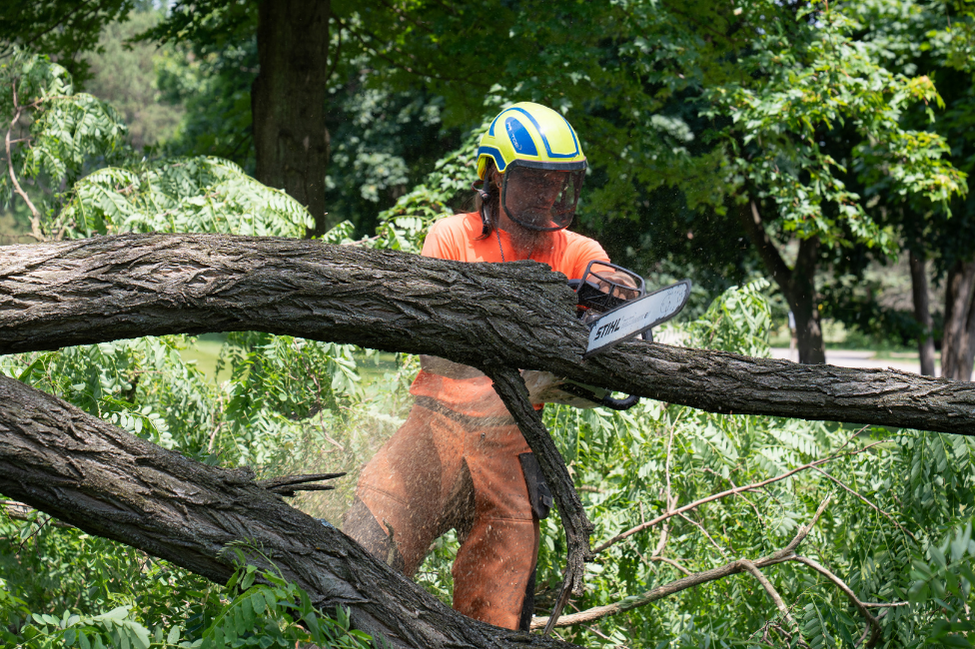
The crew arrives and walks the job site before any equipment starts. They confirm the removal plan, check the drop zone, and identify any hazards. If you have questions, this is the best time to ask them.
From there, work starts at the top of the tree and moves down. Large limbs are removed first and lowered in sections. Once the canopy is cleared, the trunk is cut in sections from the top down. All debris is chipped or stacked as the work progresses.
Once the tree is down, the crew clears the site. Brush is chipped, logs are moved, and the area is cleaned up. If stump grinding is on the job, that happens last.
You don't need to be home for the entire job, but it's helpful to be available at the start so the crew can confirm anything with you directly.
Emergency Removals Work Differently
If a tree has come down on your house, your car, or a structure, the timeline and process are different. The priority is stabilizing the situation and removing the immediate danger first. Full cleanup may happen in stages depending on what's involved.
Martin Tree Service offers 24-hour emergency response for situations that can't wait. If you have a tree down on your property right now, call us directly at (517) 295-1155 rather than filling out a form.
Getting a Realistic Timeline for Your Job
The best way to know how long your specific removal will take is to get an on-site estimate. At Martin Tree Service, our estimator comes out, looks at the tree and the access, and gives you a clear picture of what the job involves before any work is scheduled.
Estimates are free and come with no obligation. If you're ready to schedule or want to understand what you're looking at,request a free estimate here or visit ourstorm damage cleanup page if a recent storm is what brought you here.
Frequently Asked Questions
How long does it take to remove a large tree? A large tree, anything with a trunk diameter over 24 inches or significant canopy spread, typically takes a full day for a crew to remove safely. Trees close to structures or with difficult access can take longer depending on conditions.
Do I need to be home during tree removal? It helps to be available at the start of the job to confirm the plan with the crew. Once work is underway, you don't need to stay on site. Just make sure the crew has clear access to the area before they arrive.
How long does stump grinding take after tree removal? Most stumps take 30 minutes to an hour to grind depending on diameter and root spread. Larger stumps or those with extensive surface roots take longer. If stump grinding is part of your job, your estimate will account for it.
Can weather delay a tree removal? Yes. High winds, lightning, or heavy rain can push a job to another day for safety reasons. Our team will communicate with you if a weather delay affects your scheduled work.
How soon can you remove a tree after a storm? For emergency situations, we respond as quickly as possible, often the same day. For non-emergency storm damage that needs to be removed but isn't an immediate threat, we'll get you on the schedule promptly and work through the job in proper sequence.
