
Storm Damaged Tree Cleanup Checklist for Homeowners
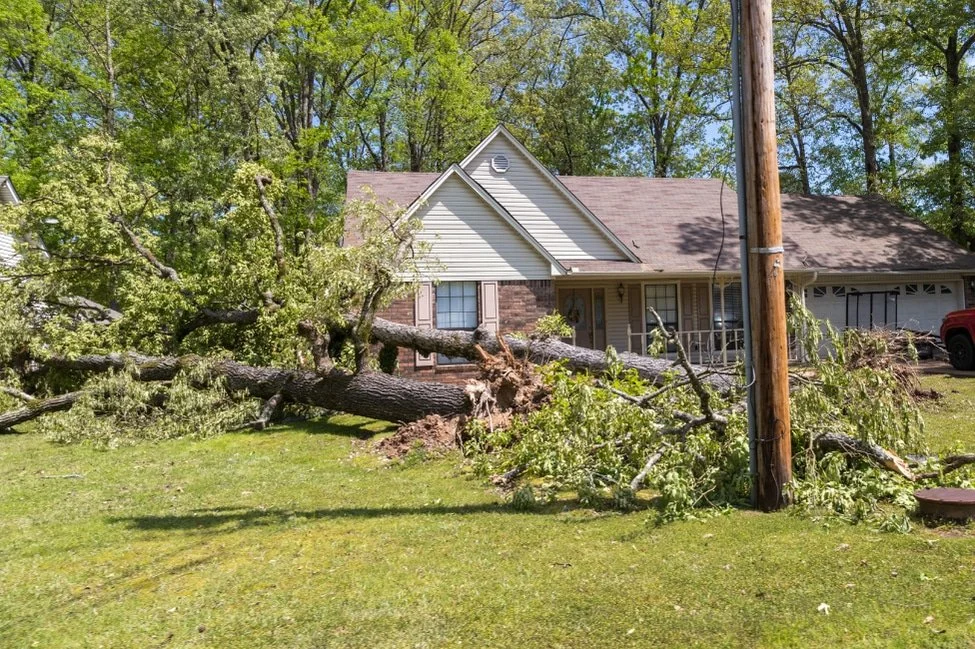
A storm just came through and your yard looks like a different place. Before you start dragging branches or firing up a chainsaw, slow down. Storm damaged trees behave differently from healthy ones, and the wrong move in the first hour can make a bad situation worse.
This checklist walks Livingston and Washtenaw County homeowners through the right steps after a storm, in the right order.
Step 1: Wait Until the Storm Has Fully Passed
Michigan storms can stall, loop back, or push a second line of severe weather through before the sky actually clears. A tree that is already leaning or has a hanging limb is far more dangerous in wind and rain than it will be once conditions settle.
Stay inside. Wait for the all-clear before stepping out.
Step 2: Walk Your Property From a Safe Distance
Once it is calm, do a slow visual pass of your yard before you touch anything. You are building a picture of what happened, not starting the cleanup.
Look for:
Branches that split but did not fall, still hanging in the canopy
Trees with a new lean that was not there before the storm
Soil that is cracked, buckled, or heaving near the base of a trunk
Debris that has come down on your roof, fence, garage, or other structures
Any part of a tree that is touching or resting near a power line
Stay out from under any tree that shows visible damage. Observe from a distance first.
Step 3: Power Lines Are a Hard Stop
If any tree or branch has come down on a power line, or is resting anywhere near one, do not approach it. Do not attempt to move the branch. The ground around a downed line can be energized even when the line looks inactive.
Do not hire anyone who offers to pull a tree off a power line before the utility company has been out. That is utility work, not tree work. A reputable tree service will tell you the same thing.
Call 911. Then call your utility company. Once the utility crew has released the scene, call Martin Tree Service and we will handle the rest.
Step 4: Photograph Everything Before You Move Anything
If a tree or branch has landed on a structure, take photos before any cleanup begins. Walk the full perimeter and shoot from multiple angles. Get close-ups of contact points and wide shots showing the overall situation.
Insurers need to see what the scene looked like before work started. According to the Michigan Farm Bureau, most homeowners policies cover tree removal when a fallen tree damages a covered structure, but documentation is required to support the claim. Take your photos first, then make your calls.
Step 5: Handle Only What Is Clearly Safe
There is a short list of things homeowners can reasonably handle after a storm. Small branches that have fallen cleanly to the ground, away from structures, away from any tree that still has visible damage overhead. That is about where the list ends.
If a task requires a chainsaw and a ladder, or you are not completely certain what is hanging above you in the canopy, leave it alone. Storm damaged trees hold tension in ways that are not visible from the ground. A branch that looks like it is resting quietly can snap back hard enough to cause serious injury when cut. According to the Centers for Disease Control and Prevention, approximately 36,000 people are treated in emergency rooms for chainsaw injuries every year. Most of those incidents happen during exactly this kind of cleanup.
Step 6: Call a Professional for Everything Else
Any of the following should be handled by a professional tree crew, not a homeowner with a saw:
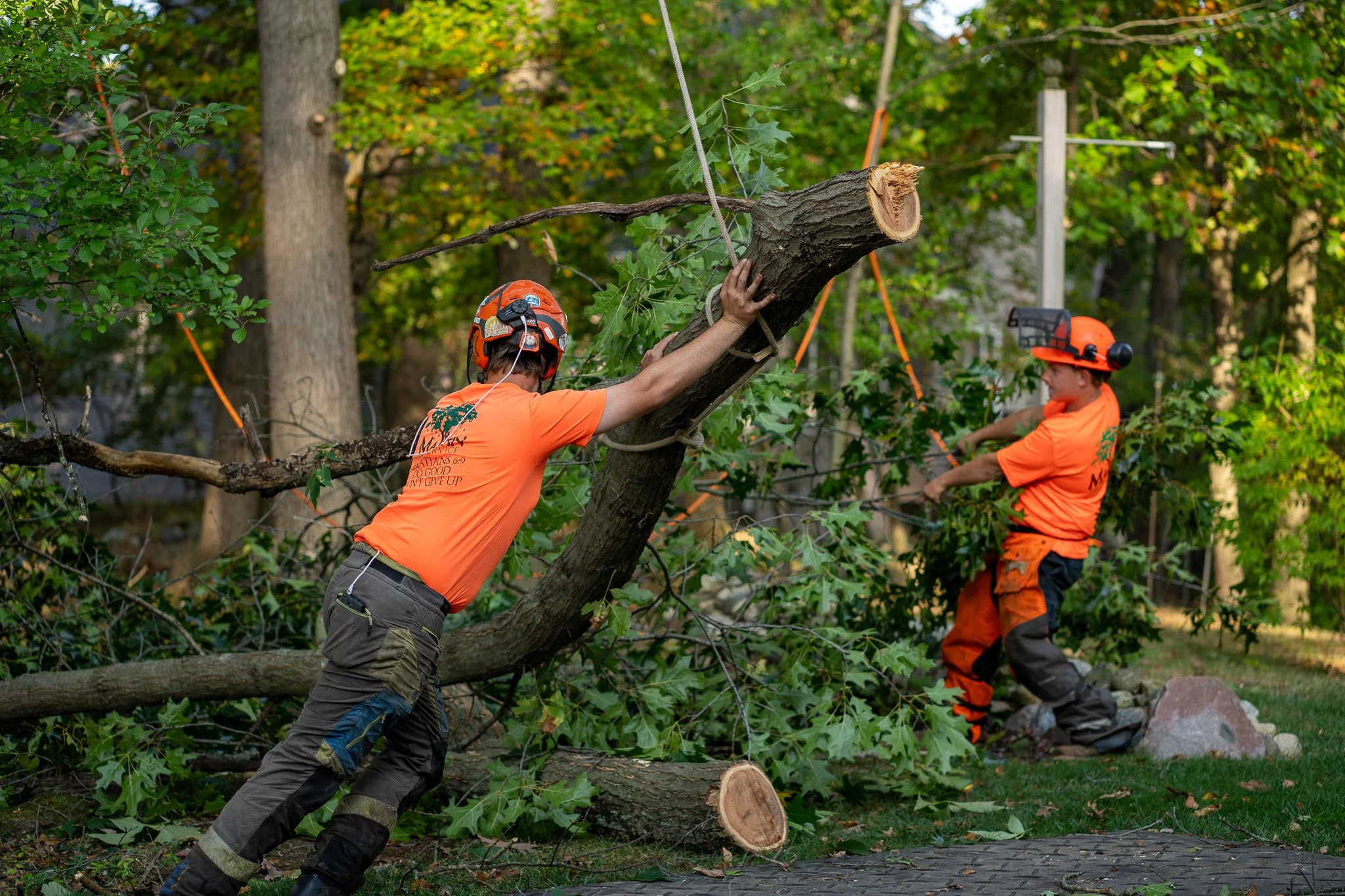
Hanging or partially split branches still in the tree
Any tree leaning toward a structure
A trunk that is cracked, split, or shows a new lean after the storm
Roots lifting out of the ground
Any branch or debris within reach of a power line
Any tree that has landed on or is pressing against your home, garage, or fence
Martin Tree Service offers free on-site estimates with no obligation and 24-hour emergency service for situations that cannot wait. Our storm damage team serves Howell, Brighton, Pinckney, Hartland, Ann Arbor and the surrounding Livingston and Washtenaw County communities. For urgent situations, call us directly at (517) 295-1155.
Step 7: Check Your Trees Again in the Days After the Storm
Storm damage is not always visible right away. Trees that look stable after a storm can show new problems in the days that follow as wood fibers continue to separate, roots settle, and canopy weight shifts.
Walk your property again 48 to 72 hours after a major storm. Look for new leans, creaking sounds when the wind picks up, or changes at the base of any tree. If something looks different than it did right after the storm, call for a professional assessment before the next weather event comes through.
Key Takeaways
Wait for the storm to fully pass before going outside
Assess from a safe distance before touching anything
Power lines require a utility crew first, not a tree crew
Document all structural damage with photos before cleanup begins
Homeowners can handle small ground-level debris only
Anything requiring a chainsaw and a ladder needs a professional
Check your trees again 48 to 72 hours after the storm
Frequently Asked Questions
Can I clean up storm debris myself?
Small branches that have fallen cleanly to the ground and are clear of structures and overhead hazards are generally safe for homeowners to move. Anything that requires a chainsaw and a ladder, or involves a tree that still has visible damage overhead should be left to a professional crew.
What do I do if a tree falls on my house?
Stay out of the affected area and call a professional tree service as soon as possible. Do not attempt to remove the tree yourself. Take photos of the damage from a safe distance before any work begins. Then contact your insurance company to start the claims process.
Does homeowners insurance cover storm damaged tree removal in Michigan?
Usually yes, when a tree has fallen on a covered structure like your home, garage, or fence. Most Michigan policies place a per-tree limit on removal costs, commonly between $500 and $1,000. If a tree falls in your yard without hitting a structure, removal is typically the homeowner's responsibility. Document everything with photos before cleanup begins.
How quickly should I call a tree service after a storm?
As soon as you identify a hazard. Trees with new leans, hanging branches, or contact with structures or power lines should not be left to wait. Martin Tree Service is available 24 hours a day for storm emergencies across Livingston and Washtenaw County.
What if a storm damaged tree looks fine but I am not sure?
Call for a professional assessment anyway. Many structural problems are not visible from the ground, and a tree that looks stable can still have compromised roots or internal damage. Martin Tree Service provides free estimates with no obligation if you want a professional set of eyes on it.
