
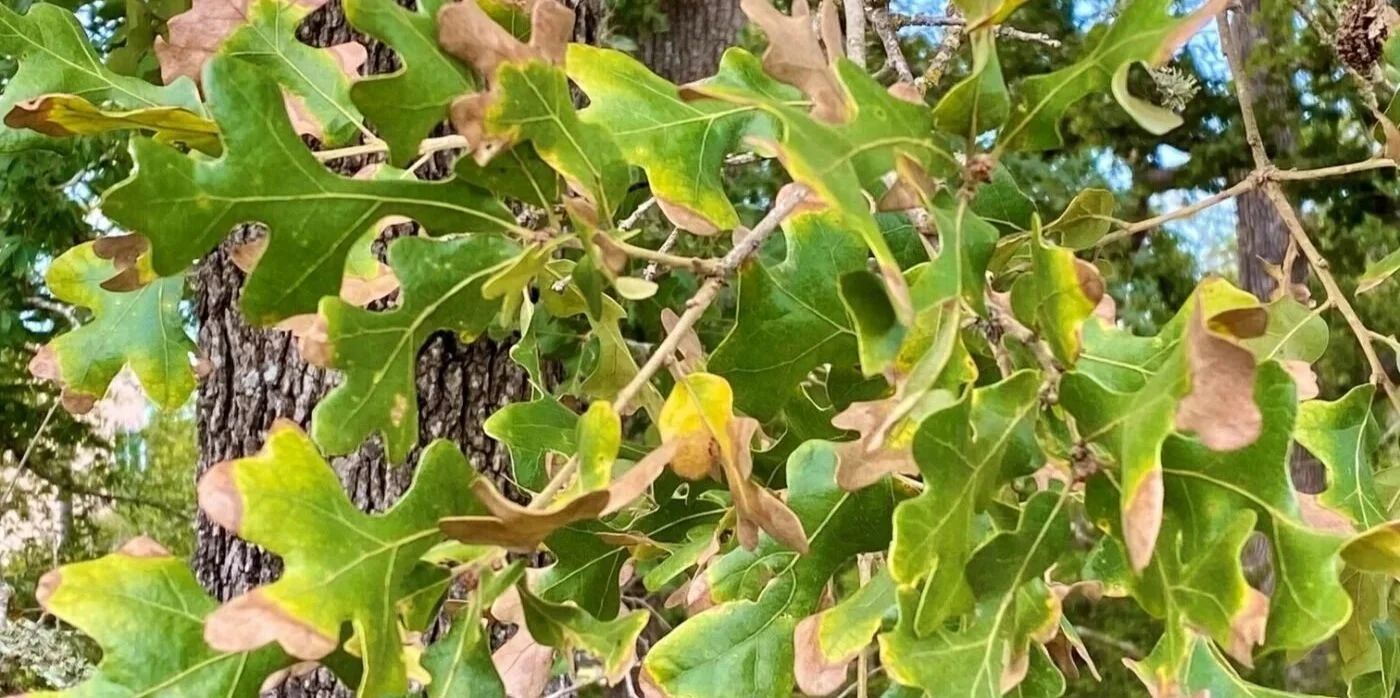
Oak wilt symptoms typically show up as rapid leaf loss starting at the top of the canopy, with leaves turning brown, wilting, or dropping while still partly green, usually between late June and September. A red oak that goes from healthy to nearly bare within a few weeks is the clearest warning sign, and it needs fast attention.
By October, a lot of homeowners are looking at a thinning oak and wondering if what they're seeing is disease or just a normal Michigan fall. Here's how to tell oak wilt apart from ordinary stress, why red and white oaks respond so differently, and what to do if you suspect it.
What Does Oak Wilt Look Like?
Affected red oaks suddenly begin to wilt from the top down, rapidly dropping leaves that can be green, brown, or a combination of both colors, according to the Michigan Oak Wilt Coalition. The pattern shows up at the individual leaf level too, not just across the canopy. Infected leaves typically brown starting at the outer edge and continue browning inward toward the base of the leaf, according to University of Minnesota.
Is It Oak Wilt or Just Fall Color?
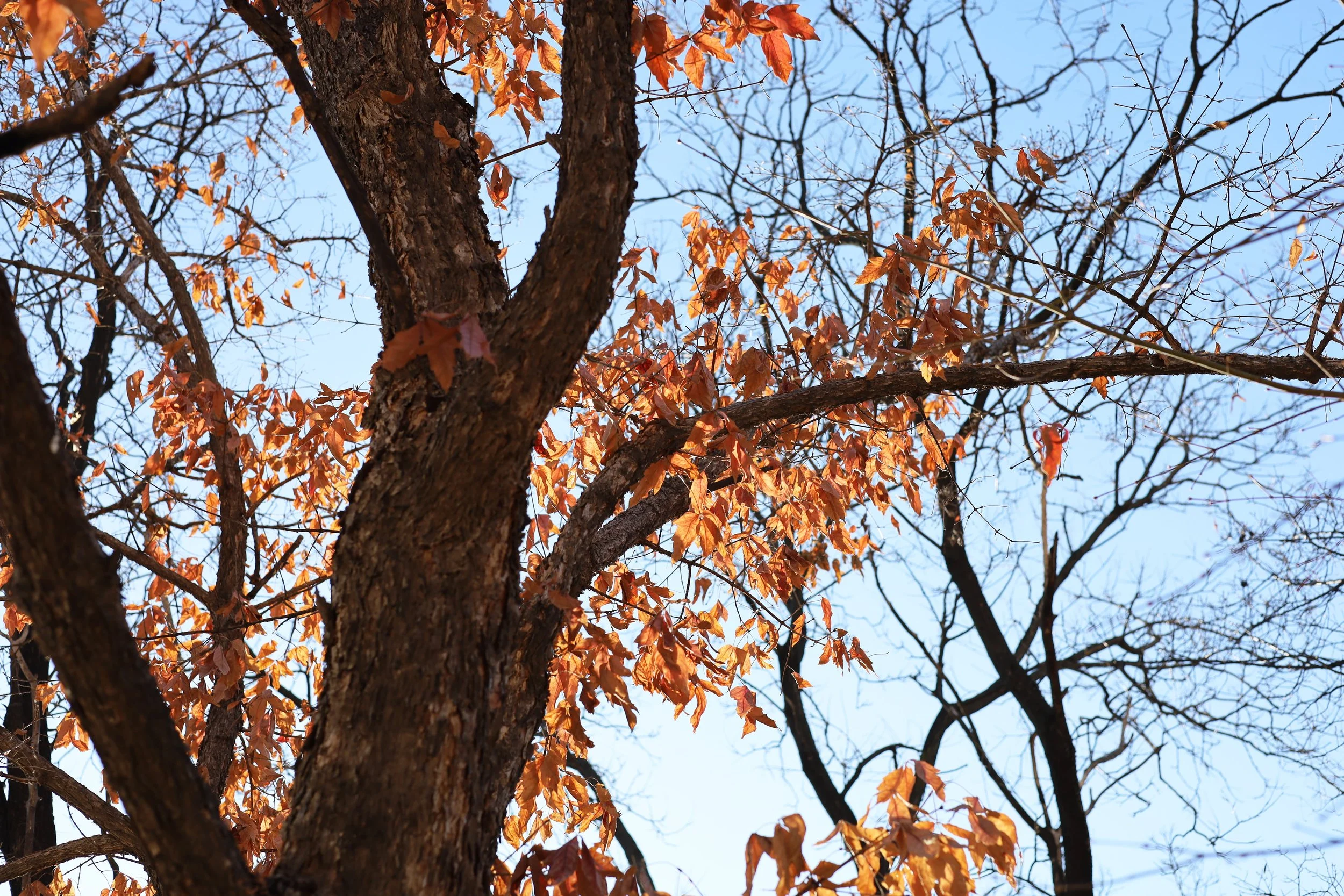
Oak wilt symptoms are most active and most visible from late June through September, which unfortunately overlaps with when Michigan oaks naturally start changing color anyway. The distinguishing factors are pattern and speed, not just color.
Normal fall color change happens gradually, moves across the whole canopy fairly evenly, and follows the first real cold snap. Oak wilt shows up earlier in the season, starts at the top and moves down, and can leave a tree looking mostly bare while nearby healthy oaks are still fully green. If you noticed a single oak looking "off" back in August while the rest of your trees looked normal, that's worth a second look now, even if the whole landscape has since started turning for fall.
Red Oaks vs. White Oaks
Not all oaks respond to this disease the same way. Red oaks, including northern red oak, pin oak, and black oak, are typically killed by oak wilt, often within the same season the infection takes hold. White oaks can also become infected but are more resistant and frequently survive. If you're not sure which type of oak you have, that's one of the first things worth figuring out, since it changes both the urgency and the likely outcome.
How Fast Can Oak Wilt Spread?
Oak wilt spreads two ways: through connected root systems and by beetles carrying fungal spores to fresh wounds on healthy trees. The root-graft route is the slower but more predictable one. The fungus typically moves outward through root grafts at a rate of about one additional tier of trees per year as an infection center expands, according to the Michigan Oak Wilt Coalition. Once symptoms start, the decline itself is fast. Infected red oaks typically lose 90 percent or more of their leaves within one to two months once symptoms appear, according to the Minnesota DNR.
The beetle-transmission route is the reason oak pruning has a strict seasonal window in Michigan. Sap-feeding beetles that carry the fungus are most active in spring and early summer, and they're drawn to the smell of fresh wounds on oaks. A cut made during that window, even a small one, can become an entry point for the disease on a tree that was otherwise healthy. That's the same reasoning behind the April 15 to July 15 pruning restriction recommended for oaks statewide. Late fall and winter are the safest times to prune oaks instead, which is why we recommend booking oak trimming during the dormant season.
That combination, a slow-building underground threat with a fast, visible collapse once it hits, is why a suspected case is worth acting on quickly rather than waiting to see what happens next season. It’s also why a homeowner shouldn’t try to prune what looks like a dead branch on a possibly infected tree: the fresh wound can create a new entry point for the fungus and the tree needs a professional look before any cutting happens, not after.
What to Expect From an Oak Inspection
A visit starts with a visual inspection of the canopy pattern, the timing of decline, and the species of oak involved, since red oaks and white oaks are evaluated differently.
For a case that isn't clear-cut from the canopy alone, Michigan State University's Plant & Pest Diagnostics lab accepts branch samples directly from homeowners for lab confirmation, an independent option for getting certainty on a borderline tree.
From there, the plan depends on what's found: removal is often the right call for a confirmed, actively dying red oak, while a white oak or an oak that turns out to have a different issue entirely may just need monitoring or a different kind of care.
Protecting the Rest of Your Property
If oak wilt is confirmed, the bigger concern is often the healthy oaks nearby, not just the one that's already declining. Because the disease travels through connected root systems, other oaks in the same area may already share a root graft with the infected tree, even if they look completely fine right now.
A few things help limit that spread. Start with nearby oaks, especially other red oaks, and have them checked rather than waiting to see if symptoms show up on their own. From there, avoid moving firewood from a removed or infected oak to another part of your property, since it can carry the beetles or fungus that spread the disease. And if your oaks are close enough together to share roots, ask about trenching during your inspection: cutting the root connections between an infected tree and nearby healthy oaks is the standard way to physically stop root-to-root spread.
Frequently Asked Questions
How do I know if my oak has oak wilt or is just stressed? Oak wilt causes rapid leaf loss starting at the top of the canopy, often with a mix of green and brown leaves falling together, typically between late June and September. A tree that thins gradually and evenly, especially closer to the first frost, is more likely dealing with general stress or normal seasonal change.
Can a tree with oak wilt be saved? It depends on the species. Red oaks are usually killed by the disease, often within the same season symptoms appear. White oaks are more resistant and frequently survive an infection, though they can still be affected.
How does oak wilt spread to other trees? Two ways: through connected root systems between nearby oaks, and by beetles that carry fungal spores from an infected tree to a fresh wound on a healthy one. The root-graft route is why oak wilt tends to spread outward from an existing infection rather than appearing randomly.
Is it safe to prune an oak that might have oak wilt? No. Any fresh wound on an oak can attract the beetles that spread the fungus, and cutting into a possibly infected tree without a diagnosis first can create a new way for the disease to spread. Have the tree assessed before any pruning happens.
What should I do if I think my oak has oak wilt? Schedule a professional assessment as soon as you notice symptoms. Fast action matters both for the affected tree and for any healthy oaks nearby that may share a root system with it.
Can lab testing confirm oak wilt for certain? Yes. When a visual inspection isn't conclusive, Michigan State University's Plant & Pest Diagnostics lab accepts branch samples directly from homeowners for confirmation. It takes longer than a visual assessment, but it removes any guesswork on a borderline case.
Noticed an oak that doesn't look right? Schedule an oak inspection with Martin Tree Service, and ask about booking an oak trimming for the dormant season while you’re at it. We serve Brighton, Howell, Dexter, Pinckney, Fowlerville, Highland, Whitmore Lake, Hamburg, and Ann Arbor, or call us at (517) 295-1155.
