
What Does a Professional Tree Climber Do?
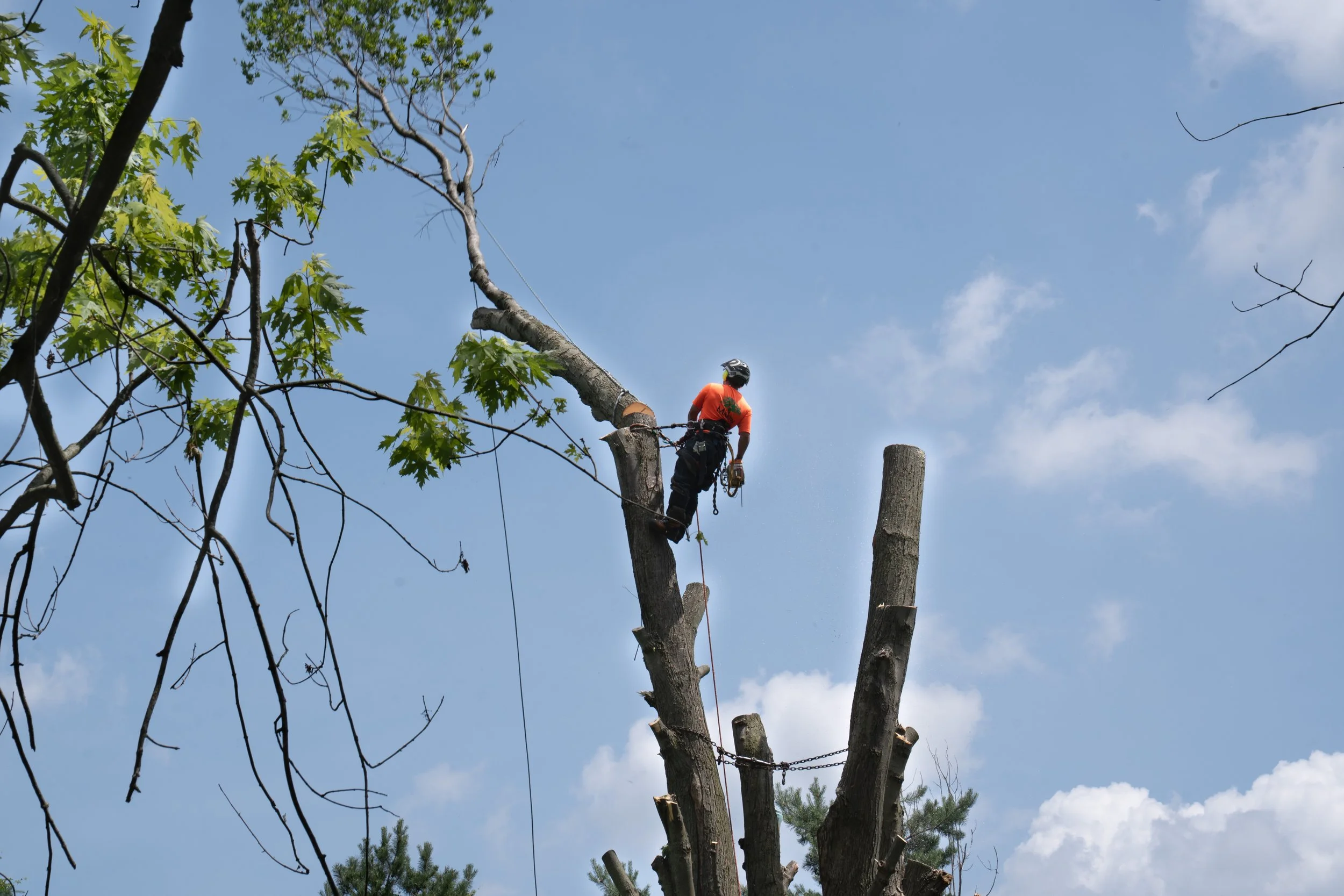
When most people think about tree trimming, they picture someone high in the canopy with a rope and chainsaw. That person is the tree climber, and they play one of the most important roles in professional tree care.
Tree climbing is not simply about being comfortable with heights. It requires technical training, physical strength, precision, and a deep understanding of tree biology and safety systems. A professional climber doesn’t just “cut branches.” They make strategic decisions that affect the long-term health, structure, and safety of the tree.
In many ways, the climber is the specialist who brings skill, science, and control into the canopy.
The Role of a Tree Climber
A tree climber is a trained arborist or tree care professional who ascends trees using ropes, harnesses, and specialized climbing systems to perform pruning, removals, cabling, and inspections.
Unlike someone using a ladder or makeshift equipment, a professional climber relies on industry-approved climbing systems designed specifically for arboriculture. These systems allow them to move safely and efficiently throughout the tree while remaining securely tied in at all times.
Once in the canopy, the climber evaluates branch structure, weight distribution, and overall tree condition. They determine which limbs should be removed, which should remain, and how each cut will influence the tree’s future growth.
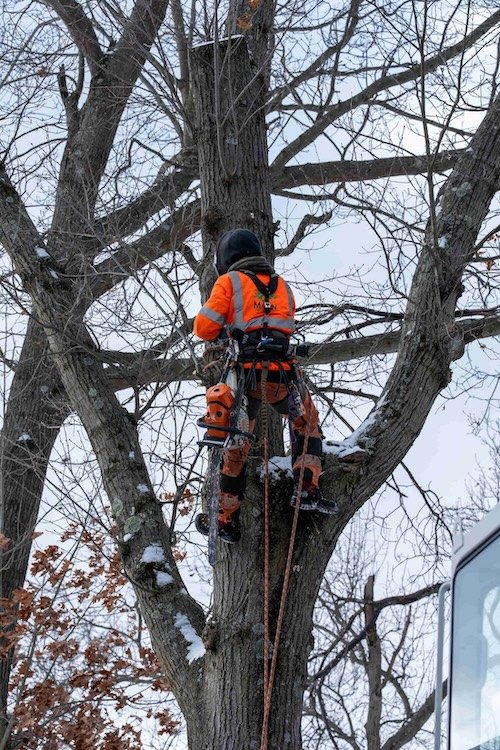
Climbers are often responsible for accessing portions of the tree that bucket trucks and heavy equipment simply cannot reach. In tight residential backyards, fenced properties, wooded areas, or landscapes with limited access, climbing is often the safest and most effective solution.
Why Tree Climbers Are Necessary
Not every property allows heavy machinery access. Narrow gates, delicate landscaping, uneven terrain, or structures positioned close to trees can make equipment use impractical or unsafe.
In these situations, a skilled tree climber provides several advantages:
Reduced lawn and property damage
Greater precision during pruning or removal
Controlled rigging over roofs, fences, or driveways
Access to confined or obstructed areas
Climbing eliminates the need to drive heavy trucks across lawns or landscaping features. For homeowners who value their yard’s appearance, this can make a significant difference.
In complex tree removals, especially when branches extend over homes, garages, power lines, or neighboring properties, a climber can carefully dismantle the tree in sections. Each piece is rigged and lowered in a controlled manner rather than simply dropped.
This level of precision is only possible with experience and training.
The Skill Behind Professional Tree Climbing
Professional tree climbers train extensively before ever working independently in a canopy. Tree climbing combines athletic ability with technical knowledge and risk management.
Climbers are trained in:
Rope systems and advanced rigging techniques
Safe chainsaw operation while suspended
Structural and corrective pruning methods
Tree biology and proper cut placement
Hazard recognition and load assessment
Emergency aerial rescue procedures
Understanding tree biology is especially important. Improper pruning can weaken a tree, invite disease, or create structural instability that may not show up for years.
For example, removing too much weight from one side of a canopy can alter balance and increase the likelihood of storm damage. Making improper cuts can slow healing and expose the tree to decay organisms.
A trained climber knows how to make clean, properly placed cuts that promote healthy regrowth and maintain structural integrity.
Safety Is Always the Priority
Tree climbing is one of the most physically demanding and high-risk roles in the tree care industry. Because of this, safety is always the top priority.
Every movement in the canopy is calculated. Professional climbers remain secured with ropes and harnesses at all times. They wear protective equipment, including helmets, eye protection, chainsaw-resistant gear, and specialized footwear.
Equally important is the coordination between the climber and the ground crew. Tree work is a team effort. Clear communication ensures that branches are rigged, cut, and lowered safely. Ground crew members manage ropes, monitor drop zones, and maintain awareness of surroundings.
When removing large limbs, climbers use rigging systems to control how branches descend. This prevents damage to structures, landscaping, and nearby objects.
Professional tree companies follow strict industry safety standards to protect the crew, the property, and anyone nearby.
Climbing vs. Bucket Trucks
Bucket trucks are valuable tools in many situations, particularly for roadside trees, utility line clearance, or open-access commercial properties. They provide efficiency and stability when terrain allows.
However, bucket trucks have limitations. They require space to position the vehicle and operate the boom safely. They may not reach interior canopy sections or trees located behind structures.
Tree climbing offers flexibility where machinery cannot operate safely. It allows for:
Access in confined residential spaces
Work on trees located in wooded or sloped terrain
Precision pruning in dense canopies
Minimal site disturbance
In many residential tree trimming projects, climbing is the most controlled and minimally invasive method available.
Why the Role of a Tree Climber Matters to You
When you hire a professional tree service, you’re not simply hiring someone with a chainsaw. You’re hiring a trained team, and the climber is central to that operation. Their expertise ensures the work is performed safely, efficiently, and with the long-term health of your trees in mind.
A skilled tree climber ensures:
Safe and controlled branch removal
Proper pruning techniques that protect long-term tree health
Reduced risk to your home and property
Minimal disruption to landscaping
Professional execution from canopy to cleanup
Poor tree work can lead to long-term damage, safety hazards, and costly corrective pruning later. Choosing a company with trained climbers ensures the job is done correctly the first time.
Tree Trimming Skill and Expertise
Tree trimming is not random cutting. It is a combination of science, skill, and experience. The climber must understand how the tree will respond to each cut, how weight shifts affect balance, and how to protect surrounding property at every step.
From the ground, tree trimming may look simple. But in the canopy, every decision matters.
The tree climber is the professional who brings that expertise into the air, balancing safety, precision, and tree health with every move.
When done properly, professional tree climbing protects not only your property, but the long-term vitality and structure of the tree itself.