
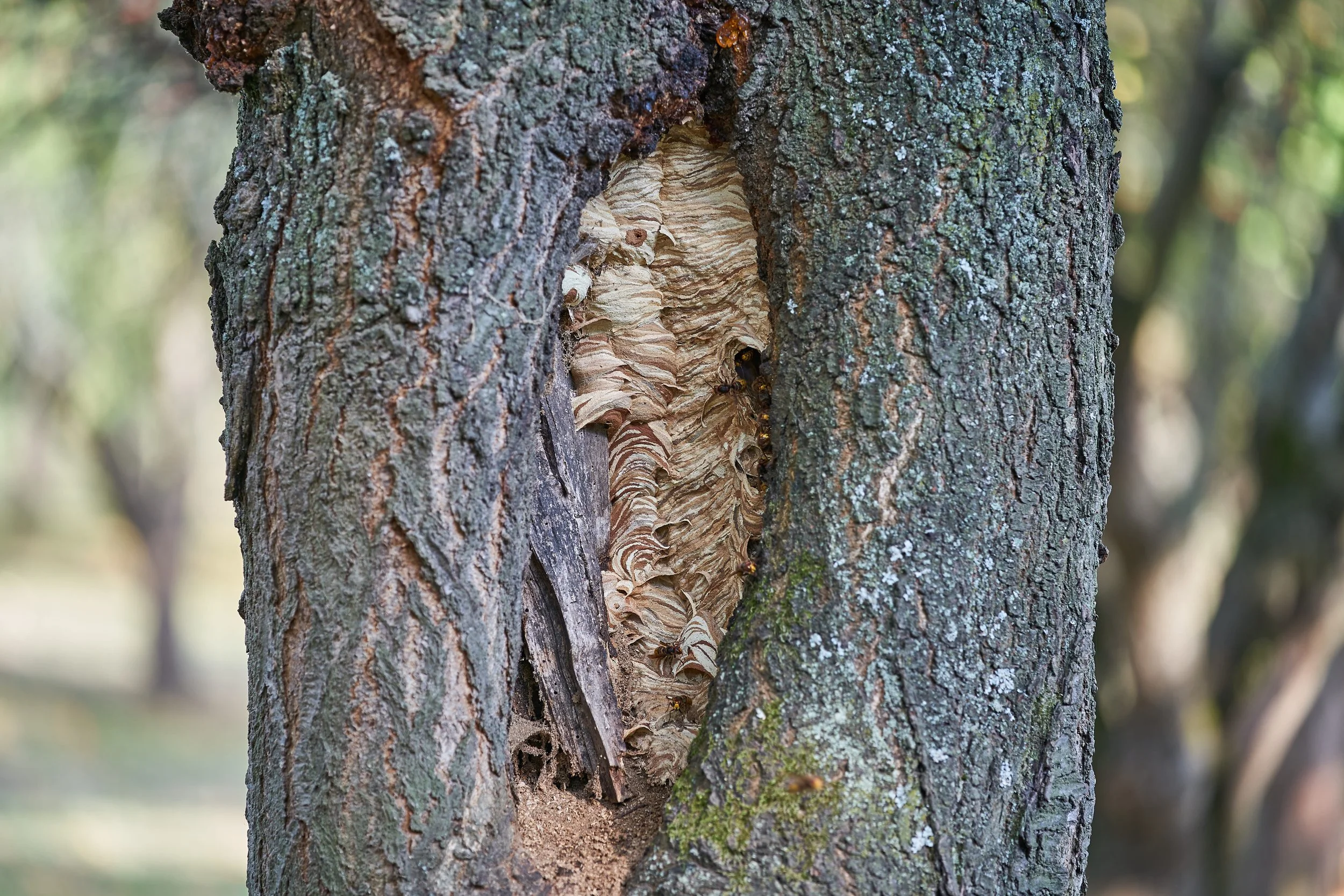
Wasp and hornet nests in trees become the most active, and the most dangerous, in late summer. Colonies reach peak size just as their food supply runs short. A papery gray nest in the canopy, a hole near the base of a trunk, or a sudden jump in stinging insects around your yard all mean it's time to have someone take a look before removal, not after.
Homeowners tend to notice these nests in August and September, right around the same time other seasonal tree issues show up. Here's how to recognize a real problem, why removing a nest from a tree isn't something to handle yourself, and what a professional visit actually involves.
Why Late Summer Is Peak Wasp and Hornet Season
Wasp and hornet colonies start small in spring with a single queen and grow through the summer as workers forage to feed developing larvae. By August, that growth phase ends. According to the University of California's Statewide Integrated Pest Management Program, defensive behavior increases as the season progresses because colony populations become larger while food becomes scarcer (UC IPM Pest Notes). With no more larvae to feed, workers shift from hunting protein to scavenging sugar, which is exactly when they start showing up around patios, garbage cans, and anywhere else people are.
That combination, a nest at its largest size of the year plus workers that are hungrier and more defensive, is why late-summer encounters tend to be worse than anything earlier in the season.
Where These Nests Actually Show Up in Trees
Not every nest looks the same, and where it's built matters for how it gets handled.
Bald-faced hornets typically build the large, papery, football-shaped nests you can see hanging in a tree's canopy, often 10 feet or higher off the ground. Yellowjackets, by contrast, favor hollow cavities, an old woodpecker hole, a cavity from a broken limb, or a soft spot of decay near the base of the trunk, where the nest itself is hidden from view until you're right on top of it.
A hollow cavity nest is often the more dangerous of the two to discover by accident. There's no visible warning before you're standing next to it.
How to Tell If a Nest Is Actually a Problem
Not every nest needs to come out. A nest tucked deep in a wooded area, far from where anyone walks, may be fine left alone until the colony dies off naturally after the first hard frost.
A nest becomes a real hazard when it's near a walkway, a door, a mailbox, a play area, or anywhere foot traffic passes close enough to disturb it. Nests near dead or damaged limbs are a separate concern, since removing the wasp problem may also mean addressing a limb that's already a structural risk on its own.
Why Removing a Nest From a Tree Isn't a DIY Job
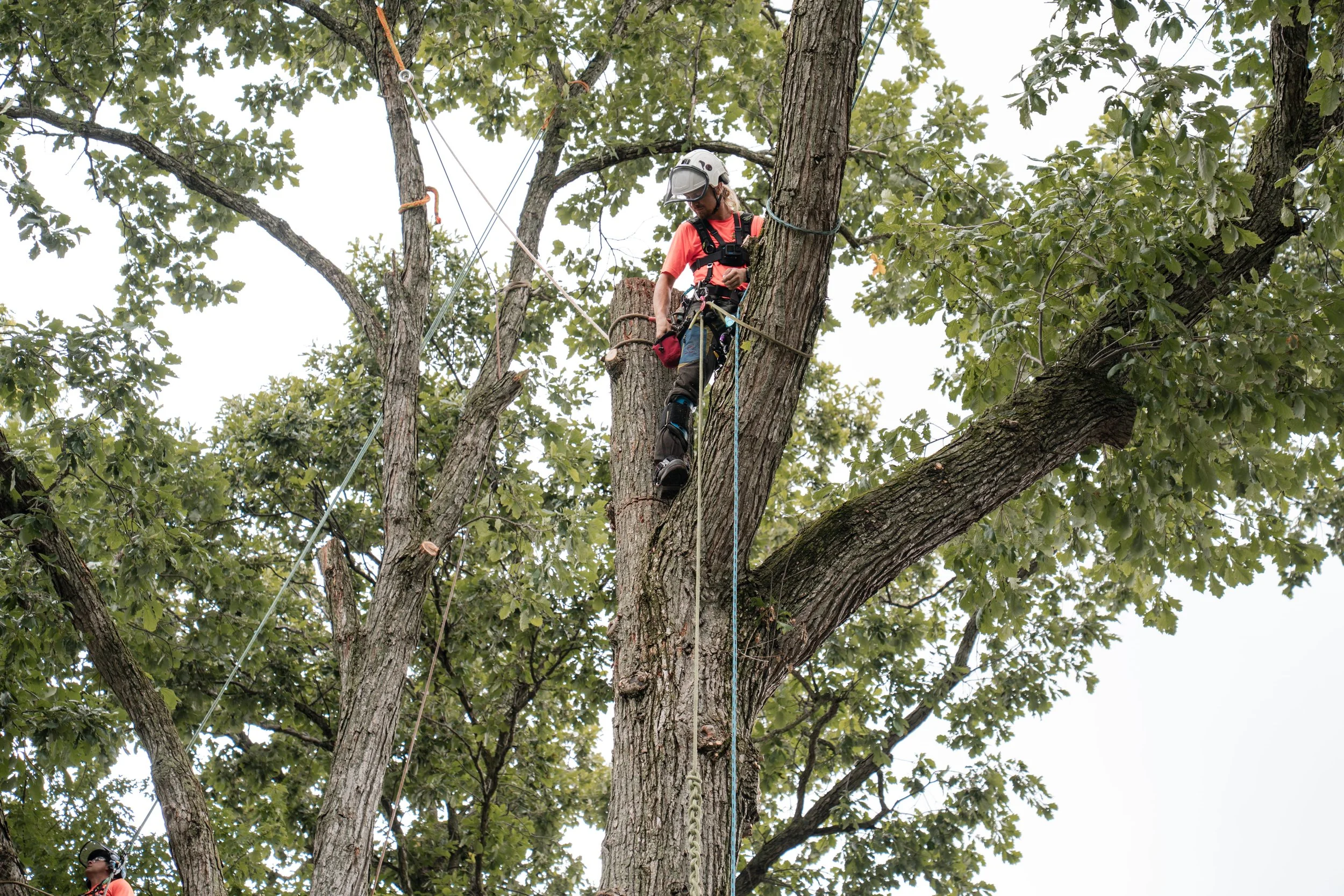
Store-bought sprays are built for nests you can reach from the ground in a few feet of open space, not a nest 15 feet up in a canopy or hidden inside a decayed cavity. Missing the nest, or only partially reaching it, tends to agitate the entire colony at once.
The safety stakes are real. According to the CDC, hornet, wasp, and bee stings caused an average of 72 deaths per year in the United States between 2011 and 2021, most from allergic reactions (CDC MMWR). Add in the fact that a hidden nest is often inside wood that's already decayed or a limb that's already compromised, and a homeowner with a ladder and a spray can is taking on a lot of risk for a job that a trained crew handles routinely.
What to Expect When You Call for Removal
A professional visit starts with identifying the nest location and species, since the approach differs for a hanging paper nest versus one hidden in a cavity. Removal is typically scheduled for early morning or dusk, when wasps and hornets are least active and the colony is concentrated at the nest. The crew wears protective gear rated for the job, and if the nest is tied to a dead limb or a decayed section of trunk, that gets flagged as part of the visit, since the nest may be a symptom of a larger tree health issue rather than an isolated problem.
Preventing Nests Next Season
Wasps and hornets favor dead wood, old cavities, and thick, undisturbed canopy for nesting. Routine trimming that clears dead limbs and opens up dense growth removes a lot of the real estate they're looking for in the first place. If you had a nest this year, a spring inspection before colonies establish is worth scheduling.
Notice a nest on your property? Schedule an inspection with Martin Tree Service, serving Brighton, Howell, Dexter, Pinckney, Fowlerville, Highland, Hamburg, and Ann Arbor.
Frequently Asked Questions
How do I know if it's wasps, hornets, or bees? Bald-faced hornets build large, gray, papery nests you can usually see hanging in a tree's canopy. Yellowjackets nest in hidden cavities, often at the base of a trunk or in an old limb hole, and you may not see the nest at all until activity picks up around it. Bees are generally less aggressive and nest differently, often in hollow trunks rather than exposed paper nests.
Is it safe to spray a nest myself? Not if the nest is elevated, hidden in a cavity, or attached to a limb you can't safely reach from the ground. Store-bought sprays are designed for small, exposed, ground-level nests. A missed or partial spray tends to provoke the entire colony at once, which is when most stings happen.
What time of year should a nest be removed? Late summer nests are at peak size and peak defensiveness, which is exactly why professional removal matters most during this window. Waiting for the first hard frost, when colonies die off naturally, is an option for nests that aren't near foot traffic.
Will removing a nest hurt the tree? No, removing the nest itself doesn't harm the tree. If the nest is inside a decayed cavity or attached to a dead limb, addressing that underlying issue is often good for the tree's long-term health anyway.
What should I do if I get stung near a nest? Move away from the area calmly rather than swatting, since sudden movement can provoke more stings. Watch for signs of an allergic reaction, such as widespread swelling, difficulty breathing, or dizziness, and seek emergency medical care immediately if any of those occur.
