
Why Stump Grinding Is Worth Doing After Tree Removal
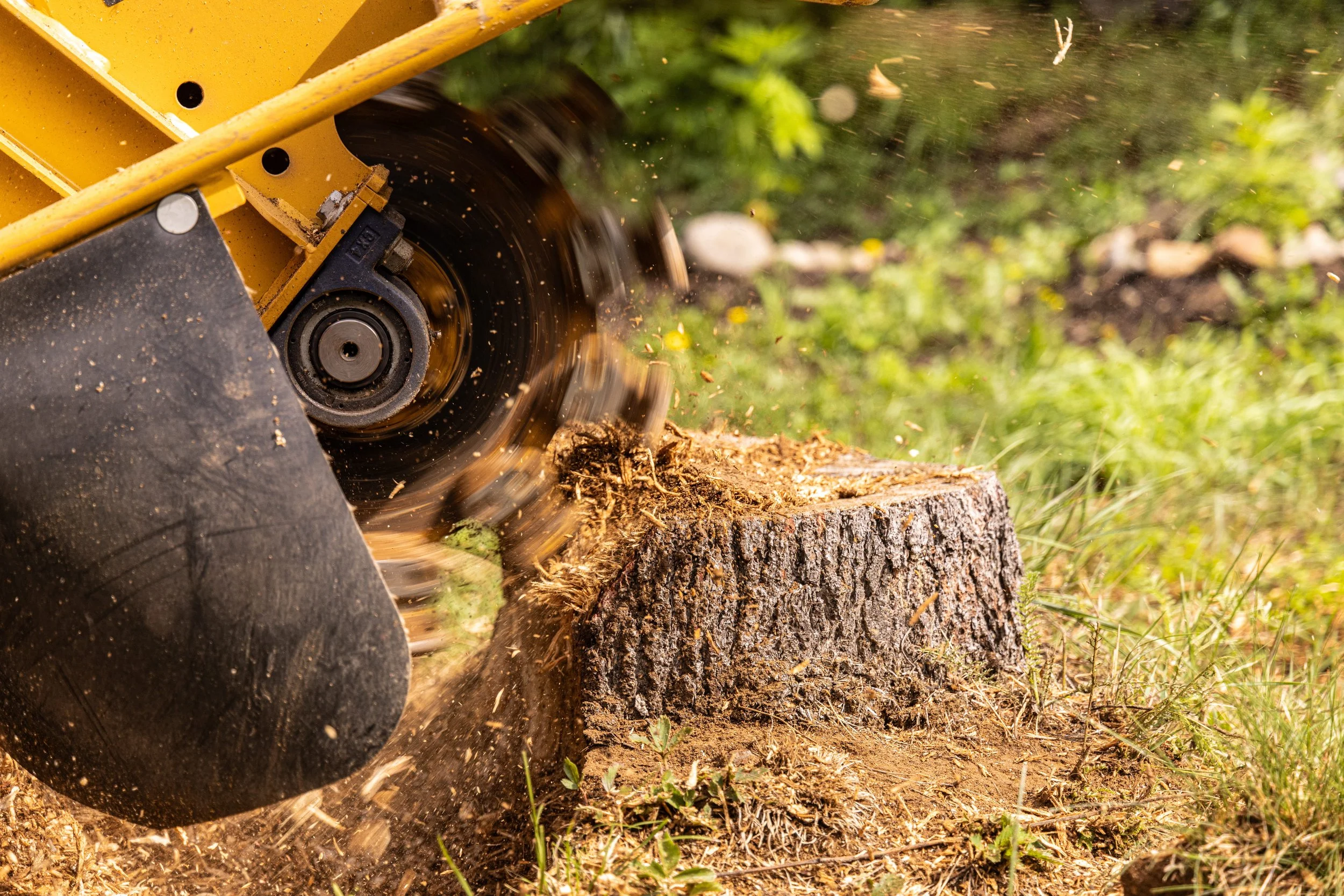
Stump grinding is the process of mechanically shredding a tree stump down below ground level using a specialized grinder, leaving loose wood chips behind instead of a stump or a hole. It's faster and less invasive than full stump removal, and for most Livingston County properties, it's the right call after any tree comes down.
Most homeowners don't think about the stump until it's already in the way, catching the mower, sprouting new shoots, or sitting in the middle of a landscaping project. Here's what stump grinding actually involves, why leaving a stump isn't the harmless option it looks like, and what to expect when a professional crew handles it.
What Stump Grinding Actually Involves
A stump grinder uses a rotating cutting wheel to chew through the wood and root flare, working the stump down anywhere from a few inches to over a foot below the surrounding soil grade, depending on what you plan to do with the space afterward. What's left behind is a pile of wood chips and mulch, not a crater. Most residential stumps take less than an hour once the crew is set up, though size, wood density, and root spread all affect that.
Stump grinding does not remove the root system. The visible stump and the structural roots near the surface are gone, but the deeper lateral roots stay in the ground and break down naturally over the following years. For the vast majority of homeowners, that's not a problem. It only becomes relevant if you're planning to build, pour concrete, or plant something with an aggressive root system in that exact spot.
Stump Grinding vs. Full Stump Removal
These two services solve the same basic problem in very different ways.
| Stump Grinding | Stump Removal | |
|---|---|---|
| What happens | Stump is shredded below grade | Entire stump and major roots are excavated |
| Time on-site | Typically under an hour per stump | Often a half-day or more |
| Yard disruption | Minimal, no digging | Significant, leaves a hole to fill |
| Root system | Deeper roots remain and decompose naturally | Most of the root mass is removed |
| Best for | Homeowners who want the area usable again quickly | Sites where new construction or deep planting is planned |
For most residential and light commercial situations, grinding is the more practical option. Removal makes sense when a root system genuinely needs to come out, such as before pouring a foundation or driveway.
Why a Leftover Stump Isn't as Harmless as It Looks
A stump sitting in the yard is a mowing hazard and an eyesore, but the bigger issue is underground. As a stump decays, it can host wood-decay fungi that spread to nearby healthy root systems. According to the University of Minnesota Extension, the fungus responsible for Armillaria root rot produces rhizomorphs, root-like strands, that can spread up to 10 feet from an infected stump to infect the roots of nearby trees (UMN Extension). If you have other valuable trees nearby, an old stump left to rot is a slow-moving risk to them too.
Beyond disease spread, old stumps also send up new shoots from the remaining roots, create uneven ground that's easy to trip over, and turn into a soft, damp hiding spot for insects. None of that shows up on day one. It shows up a season or two later, usually after it's already caused a problem.
Why DIY Stump Grinding Usually Backfires
Rental stump grinders are available at most equipment rental yards, and it's tempting to save the cost of a professional visit. In practice, this is one of the more common ways homeowners end up hurt or with a bigger bill than they started with.
Grinders throw wood chips and debris at high speed, and the cutting wheel can kick back hard if it catches a buried rock, an old fence post, or a root you didn't know was there. Rental units also aren't sized for every stump. Underestimate the root spread and you'll either stall the machine repeatedly or leave the job half finished. And if there's a utility line, irrigation pipe, or septic component anywhere near the stump, that's not something a weekend rental comes with a way to check for.
A professional crew brings the right size equipment for the stump in front of them, knows what to look for before the first cut, and carries the insurance to cover it if something unexpected turns up underground.
What Happens During a Professional Stump Grinding Visit
Site assessment. The crew looks at stump size, root spread, and anything nearby that needs protecting, like a driveway, irrigation line, or garden bed.
Utility and obstacle check. Buried lines, sprinkler heads, and shallow utilities get flagged before the grinder starts.
Grinding. The stump is worked down to the agreed-upon depth, typically a few inches below grade for lawns, deeper if you're planning to plant or build there.
How Long It Takes and What Affects the Job
A single, average-sized residential stump is usually a same-visit job. What extends the timeline is the number of stumps, the diameter and species of the tree that was removed (dense hardwoods like oak take longer than softer species), how far the roots have spread, and how easy the equipment can get to the stump. Property managers and HOAs grinding multiple stumps across a site should expect the visit to be scheduled around total volume rather than a flat per-stump estimate.
Ready to deal with that stump? Request a free estimate from Martin Tree Service, serving Brighton, Howell, Dexter, Pinckney, Fowlerville, Highland, Hamburg, and Ann Arbor.
Frequently Asked Questions
How long does stump grinding take? Most single residential stumps are ground down in well under an hour once the crew arrives and sets up. Larger stumps, dense hardwood species like oak, or sites with several stumps take longer. Property managers grinding multiple stumps across a site should plan for a longer visit based on total volume, not just stump count.
Can I plant a new tree where a stump was ground? You can plant grass or shallow-rooted plants almost immediately. For a new tree in the exact same spot, it's worth waiting for the ground stump material to break down and, in some cases, having any remaining large roots addressed first so the new tree isn't competing with old root mass.
Does stump grinding remove the roots? No. Grinding removes the visible stump and the surface root flare, but deeper lateral roots stay in the ground and decompose naturally over the next few years. Full removal is the option when a root system genuinely needs to come out.
Is stump grinding messy? It's far less disruptive than removal. There's no hole to fill, and the main byproduct is wood chips.
How soon after tree removal should I grind the stump? There's no strict deadline, but sooner is generally better. A fresh stump is easier to grind than one that's been sitting for years, and grinding it early prevents new sprouting, tripping hazards, and the early stages of the decay that can spread to nearby trees.
