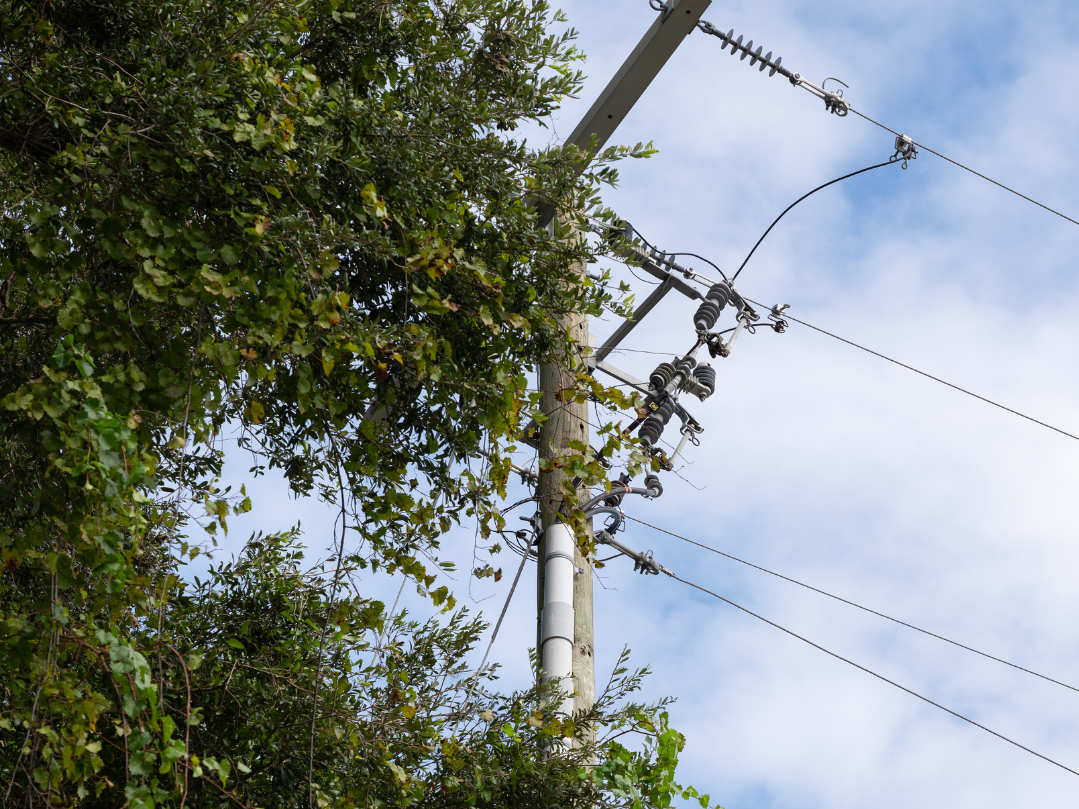
Your tree is too close to the power lines if any part of it already touches a wire, or if its growth is on a clear path to reach one within the next season or two. The line running from the pole to your house, called the service drop, is the one to watch most closely, and keeping it clear is the homeowner's job, not the utility's.
Most homeowners assume any tree-and-wire problem is the power company's job to sort out. For the main lines running down your street, that's true. For the line feeding your own house, it isn't, and that gap in understanding is exactly where a lot of preventable outages and repair bills come from.
Why This Actually Matters More Than It Looks
Tree contact with power lines isn't a rare fluke. According to the Michigan Public Service Commission, falling trees and branches are the single biggest source of power outages in the state. DTE Energy, which serves much of southeast Michigan, states that half the time its customers spend without power traces back to trees and branches falling into electric equipment during storms.
That's the utility-side picture. On your own property, the stakes are more direct. A branch resting on your service line is a hazard. So is a tree leaning toward the drop, or a limb slowly closing the gap to a wire. Any of these can mean shock, fire, or an outage sitting in your yard.
Whose Responsibility Is It: You or the Utility?
Not every wire on your property is treated the same way.
| Primary Lines & Poles | Service Drop | |
|---|---|---|
| What it is | Main distribution lines running along the street | The single line running from the pole to your house |
| Who maintains it | DTE Energy or Consumers Energy | The homeowner |
| Who trims trees near it | Utility vegetation management crews | You, or a tree service you hire |
| What happens if it's ignored | Utility schedules trimming on its own cycle | Risk sits on your property until you address it |
DTE and Consumers Energy both run scheduled trimming programs along their main rights-of-way, but neither company is responsible for the branch hanging over the wire that runs to your specific house. That part is on you.
Warning Signs a Tree Is Becoming a Power Line Hazard
Walk your yard before storm season and look for:
Branches that already touch or rub against a line, even lightly. Wind will only close that gap further.
A tree growing on a clear path toward a line, even if it hasn't reached it yet.
Any tree leaning toward your service drop or a nearby pole.
Dead or weak limbs positioned above a line. Those fail first in wind or ice.
If a branch is already touching a line, treat it as an emergency tree removal situation, not something to schedule for later. Address everything else on this list before the next storm, not after.
Why This Isn't a Job for a Homeowner With a Ladder
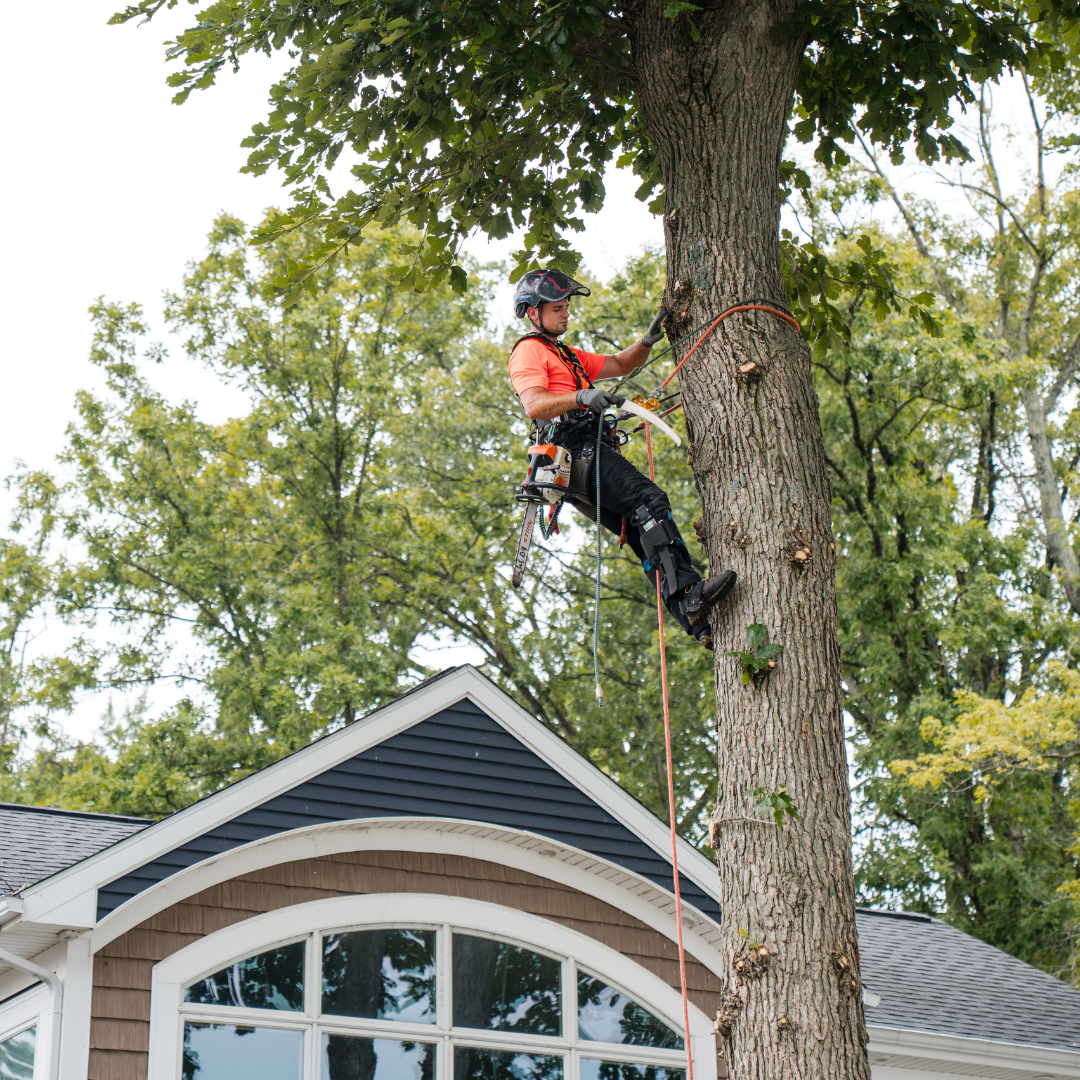
Any tree work near an energized line carries a real risk of shock or electrocution, and it's not always obvious which lines are live at a given voltage. Utility service drops are lower voltage than the main distribution lines, but they still carry enough current to seriously injure or kill someone working too close to them without the right training and clearance procedures.
Professional crews are trained to identify which lines require utility coordination before any cutting starts, and in some cases a line needs to be temporarily de-energized by DTE or Consumers Energy before work near it can safely proceed. That's not a step a homeowner can arrange or safely skip.
What to Expect From a Line-Clearance Assessment
A visit starts with identifying exactly which line is involved, since work near a utility-owned primary line is handled differently than work on your own service drop. The crew evaluates the tree's health, lean, and growth direction relative to the line, not just the branch that's currently closest to it. If utility coordination is needed, that gets arranged before any cutting begins. The goal is a clearance that holds up for a few years, not just a quick trim that grows back into the same problem by next season.
Planning Ahead When You're Adding New Trees
If you're planting anything new on your property, keep the mature height and spread of the species in mind relative to any nearby lines and poles. A tree that looks perfectly clear of a wire at five feet tall can be a real problem at thirty. Thinking about placement now avoids a much bigger removal or clearance job a decade from now.
Frequently Asked Questions
Is the utility company responsible for trimming trees near my house? Only for their own main distribution lines and poles. The service drop, the single line running from the pole to your house, is the homeowner's responsibility to keep clear of tree growth.
How do I know if a branch is actually touching a power line? Look for any point of contact between foliage or limbs and the wire, even light contact, since wind and growth will make it worse over time. If you're not sure whether what you're seeing is a real hazard, a professional assessment is the safer way to find out than getting closer yourself.
Can I trim branches near a power line myself? It's not something to handle on your own. Even lower-voltage service lines carry enough current to cause serious injury, and it's not always possible to tell which lines require utility coordination before cutting. A trained crew knows how to make that call safely.
What happens if a tree damages a power line during a storm? Contact your utility company to report the outage and downed line, and stay well clear of the area, since downed lines can be energized even when they look inactive. Once the utility has secured the scene, emergency tree removal can safely clear the tree or debris.
How often should trees near power lines be checked? An annual look, especially before storm season, catches most developing problems early. Fast-growing species near a line may need more frequent attention than slower-growing ones.
Have a tree getting close to a line? Schedule a line-clearance assessment with Martin Tree Service, serving Brighton, Howell, Dexter, Pinckney, Fowlerville, Highland, Hamburg, and Ann Arbor.
