
Five Signs Your Tree Needs Emergency Care
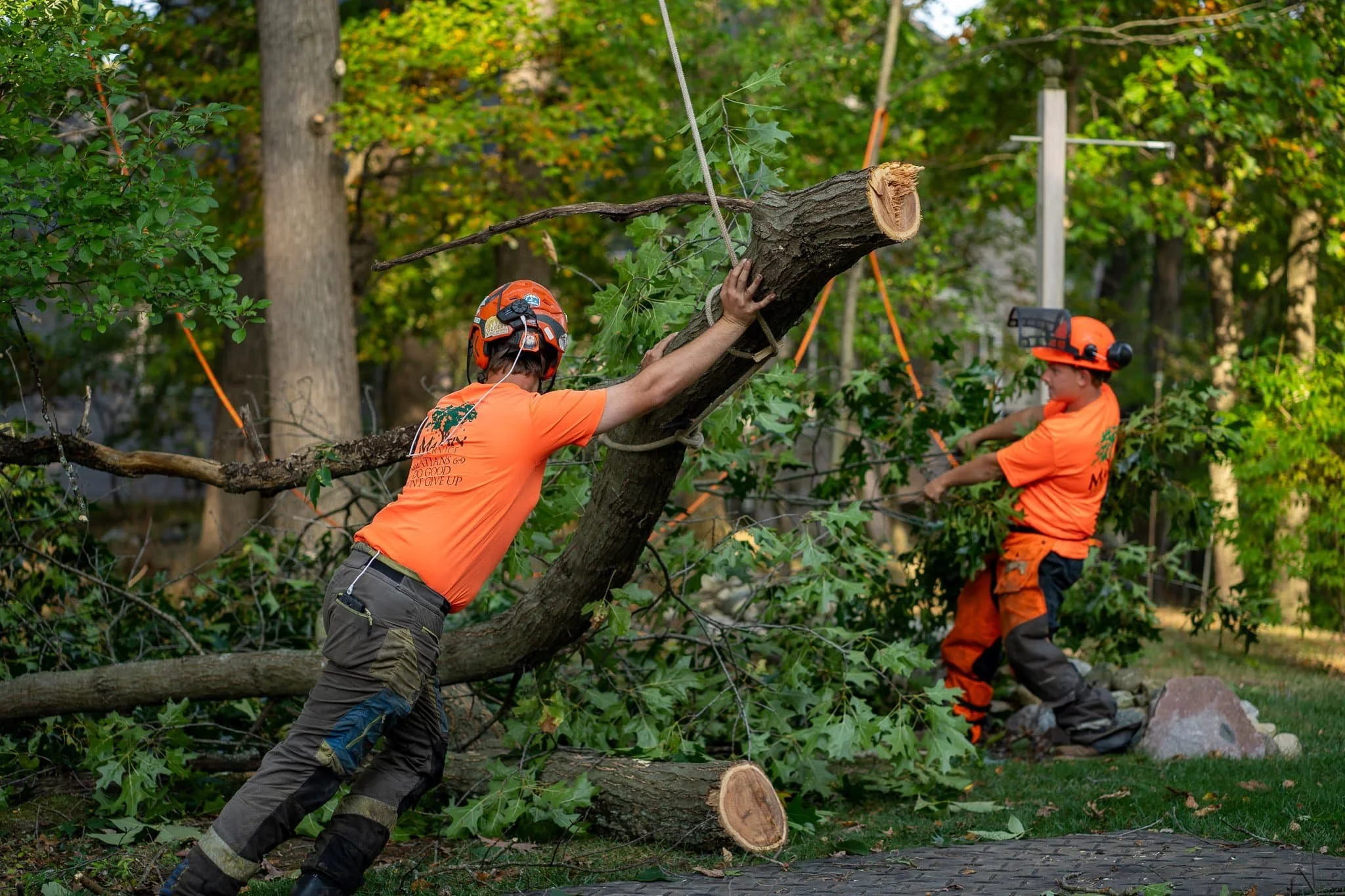
How do you know when a tree needs emergency care?
A tree needs emergency care when it shows large dead branches hanging over a home or driveway, a sudden new lean, deep cracks in the trunk, mushrooms growing at the base, or visible storm damage. Any one of these signs means the tree could fail without much warning.
In Livingston and Oakland County, wet clay soils and lake-effect storms put extra stress on mature oaks, maples, and ash trees. An early call to a professional arborist is the difference between a routine pruning job and a five-figure emergency removal.
Most homeowners do not realize a tree is dangerous until a limb is already on the roof. The five signs below give you a head start.
1. Large Dead Branches Are Hanging Over Your Home, Driveway, or Play Area
Dead limbs are the single most common cause of tree-related property damage in Michigan, and arborists have a name for them: widow-makers. Once a branch dies, it loses moisture and flexibility. The wood fibers begin separating from the living trunk at the attachment point, and the branch becomes unpredictable.
Branches die for several common reasons. The emerald ash borer, confirmed by Michigan's Department of Natural Resources throughout the state, kills ash limbs from the canopy down. Oak wilt, found in Livingston, Washtenaw, and Oakland counties, can take a healthy red oak from green to dead in a single growing season. Storm wounds, girdling roots, and old pruning cuts that never fully closed are also frequent causes.
The risk increases sharply when dead wood is positioned over something valuable. A dead branch over a back lawn is a nuisance. The same branch over a bedroom window, a parked vehicle, or a children's play area is an emergency. Wait for the next thunderstorm and that decision gets made for you.
Professional tree trimming removes hazardous limbs at the branch collar, giving the wound the best chance to seal. A trained climber also spots secondary issues a homeowner typically misses, like included bark in a co-dominant union or carpenter ant activity at the base of a limb. If a limb is already suspended over a structure, our emergency tree removal crew can respond the same day.
2. The Tree Has Started Leaning, or the Soil at the Base Is Lifting
Before you look at the tree itself, inspect the soil around the base of the trunk. Cracked earth, raised turf, or a ridge of soil pushing up on the side opposite the lean can indicate that the root system is shifting. When trunk lean is accompanied by root-plate movement, the risk of tree failure increases significantly. A tree showing these signs should be evaluated by a qualified arborist before the next major storm.
Several factors make this especially common in Livingston County. The clay-heavy soils around Howell, Brighton, and Hartland hold water for days after a heavy rain, softening the ground and weakening the anchoring root system. New construction is another frequent trigger. Excavating for a pool, an addition, or a French drain can sever a third or more of a mature tree's structural roots without leaving any visible damage above ground.
If the lean points toward a target, meaning a house, garage, road, power line, or any area where people spend time, the tree needs to be assessed that same day. A trained arborist can sometimes stabilize a leaner using a dynamic cabling system or a soil-anchored guy wire. Both options are part of our tree service. More often, removal before the next storm is the right answer.
3. There Are Cracks, Cavities, or Hollow Areas in the Trunk
The trunk carries the entire weight of the tree. Even small structural defects can signal serious danger, because trunk bending strength scales with the cube of the wood's radius. Lose a fifth of your sound wood and you lose roughly half your bending strength.
Three patterns are worth recognizing:
A vertical crack running more than a few feet up the trunk is often called a frost crack or rib. It typically traces back to internal decay or a winter freeze event. A horizontal crack on the upper side of a branch union is more serious because it means the wood is already pulling apart under load. A cavity, the open hole where a limb once was, is not automatically a crisis on its own. The industry's widely used guideline is the 30 percent rule: if the remaining sound wood around a cavity measures less than 30 percent of the trunk's diameter, the tree has crossed into failure territory.
Tap testing with a rubber mallet, or a resistograph drilling evaluation, lets an arborist measure how much of that wood is still solid.
Visible fungal conks, particularly Ganoderma or Inonotus species growing from a trunk wound, are a serious warning sign. Conks are the fruiting bodies of decay fungi that have already been working inside the wood for years. By the time they appear on the outside, the internal decay column is typically substantial.
Storm impact, lightning strikes, mower damage, and string-trimmer cuts at the root flare are the most common starting points for trunk decay on Michigan residential trees. Once an arborist has assessed the defect, the options typically include pruning to reduce wind load, a structural support system, or removal. Our oak tree trimming service specifically addresses the structural issues that put large oaks at risk.
4. Mushrooms or Fungi Are Growing Near the Base or on Surface Roots
This is the warning sign homeowners are most likely to ignore, and arborists are most likely to take seriously. Mushrooms at the base of a tree mean decay fungi are actively breaking down the structural roots or lower trunk. Because root decay happens underground, the tree can look perfectly healthy in the canopy right up until it falls.
A few species are worth knowing in southeast Michigan. Armillaria, commonly called honey mushroom, produces clumps of honey-colored mushrooms in fall and spreads through the soil on dark, shoestring-like strands. Ganoderma applanatum, the artist's conk, forms shelf-like growths on the lower trunk. Both species can hollow out a root system over several growing seasons.
Signs that root decay has progressed to a dangerous level include thinning leaves in the upper canopy, premature fall color (red maples turning orange in August are a classic example), unusually small leaves, and dead branch tips scattered through the crown. If you notice mushrooms at the base of a yard tree, especially one within falling distance of your house, schedule a tree inspection before the next round of storms. Martin Tree serves homeowners across Pinckney, Brighton, Howell, and the surrounding communities.
5. The Tree Has Visible Damage from a Recent Storm
Michigan's geography puts Livingston and Washtenaw Counties in an active storm corridor. According to the National Weather Service Detroit/Pontiac forecast office, the region experiences dozens of severe thunderstorm warnings each year, plus damaging straight-line winds, ice storms, and the occasional tornado. Every one of those events leaves trees with damage that is not always visible from the ground.
After any storm, walk your property and look for:
Limbs broken but still hanging in the canopy (arborists call these hangers)
Long strips of bark peeled away from the trunk
A trunk that has split through a major branch union
Fresh soil cracks at the base of any leaning tree
Roots lifted out of the ground on the windward side
Many of these defects hold for a few days or weeks, then fail in the next weather event. According to Penn State Extension's guidance on helping trees recover after storms, damaged limbs and compromised trees are frequently unbalanced and under extreme force that is not apparent to inexperienced individuals. Disturbing these trees without proper training and rigging can release that stored energy with little warning.
DIY storm cleanup is the most dangerous tree work a homeowner can attempt. According to the Centers for Disease Control and Prevention, approximately 36,000 people are treated in hospital emergency departments for chainsaw injuries every year. Our storm damage cleanup crews use rigging, bucket trucks, and crane work to release that tension safely. Call us at (517) 295-1155 after any significant storm event.
Why Preventive Tree Care Costs Less Than Emergency Removal
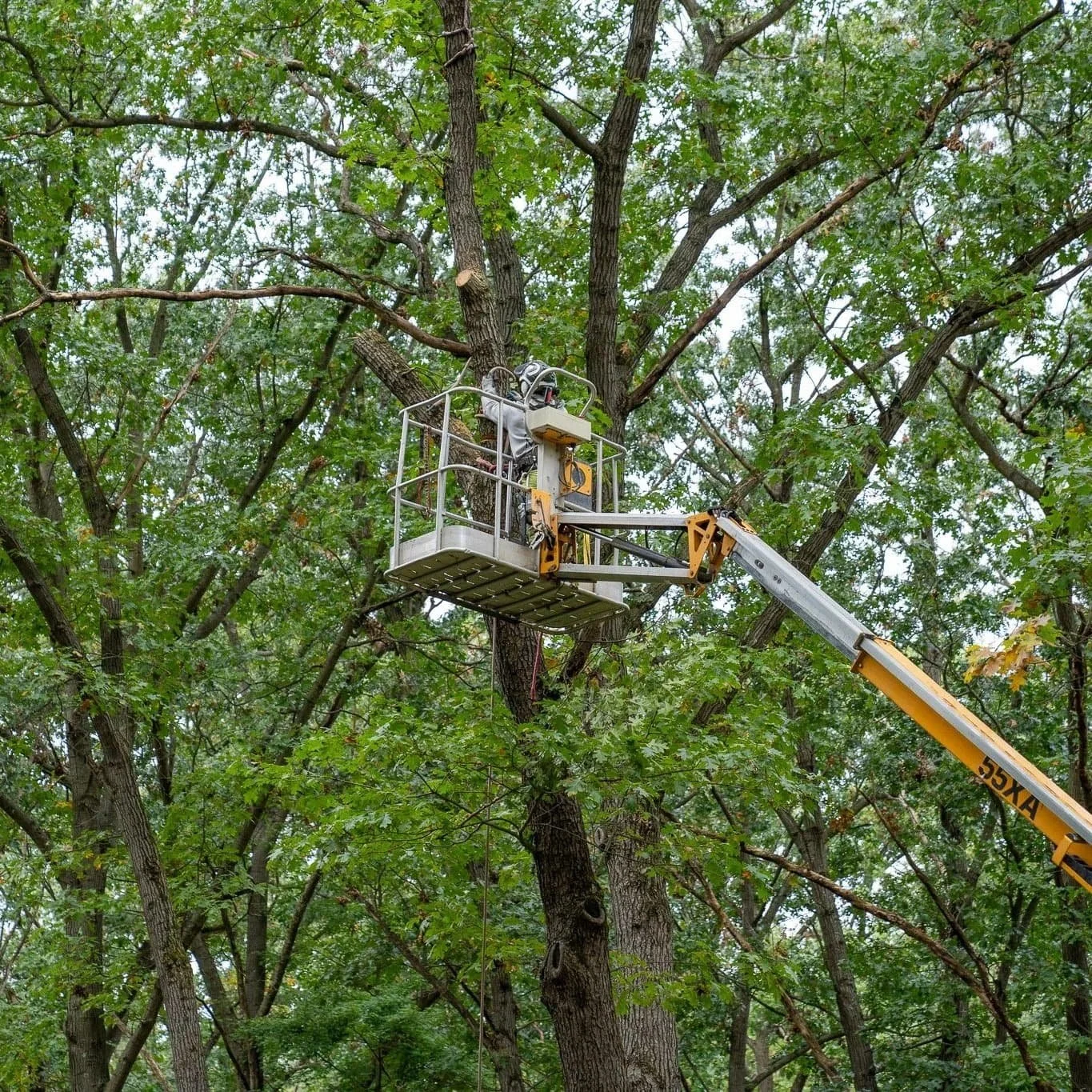
The math is not complicated. A routine residential pruning cycle costs a few hundred to a few thousand dollars, depending on tree size and access. An emergency removal after a tree falls on a structure can run $5,000 to $15,000 just for the tree work, with separate roofing, siding, and gutter claims on top.
Routine pruning, soil care, and an annual walk-through with a professional arborist catch the early warning signs before they become emergencies. The Tree Care Industry Association recommends a visual inspection at least once a year for any tree within falling distance of a structure, and a more thorough evaluation every three to five years for high-value or high-target trees.
Well-maintained trees also survive storms better. Penn State Extension notes that trees with good structure and sound branch unions lose far fewer limbs during severe weather than neglected trees in the same area. See our tree trimming guidelines for more on how proper pruning builds long-term storm resistance.
Why Hiring a Professional Matters
Tree care and arboriculture remain among the deadliest occupations in the United States. Data from the U.S. Bureau of Labor Statistics Census of Fatal Occupational Injuries show that tree trimmers and pruners suffer fatal injury rates many times higher than the national average, with falls, struck-by incidents, electrocutions, and chainsaw-related trauma among the leading causes of death.
A reputable tree care company in Michigan should carry current general liability insurance and workers’ compensation coverage for every person on the crew. Many of the lowest bids that arrive after a storm come from out-of-state crews working from pickup trucks. If something goes wrong, those crews are typically uninsured and unreachable within days.
Martin Tree carries full general liability and workers’ compensation insurance. You can read 500 or more verified client reviews on our Google profile or learn more about us.
When the work involves a leaning tree, a split union, or anything within reach of a power line, call your tree care company before calling your insurer.
Schedule a Tree Inspection Before Problems Get Worse
If you have noticed any of the five signs above on your Livingston County property, the safest next step is a professional on-site inspection. Martin Tree Service provides tree trimming, tree removal, storm cleanup, and preventative care across Howell, Brighton, Pinckney, Hartland, Fowlerville, Ann Arbor, Washtenaw County, and the surrounding communities. Our crews are fully insured and equipped for everything from a single hazard limb to a 100-foot oak over a roofline.
Request a free estimate or call us directly at (517) 295-1155.
Frequently Asked Questions
How quickly should I act on a leaning tree?
A tree that has always leaned in the same direction is usually stable. A tree that is newly leaning, or one where the soil at the base is cracked or lifted, should be inspected the same day. Once a root plate begins to rotate, failure during the next significant wind event becomes likely. Avoid parking vehicles or spending time under the tree until an arborist has evaluated it. Contact us for a same-day assessment on any tree showing a new lean.
Will my homeowners’ insurance cover emergency tree removal?
Most Michigan homeowners’ policies cover tree removal only when a tree has fallen on a covered structure such as a house, garage, fence, or driveway. Insurers typically cap the removal portion at $500 to $1,500 per tree. A tree that falls in the yard without hitting a structure is usually not covered. Document the damage with photos before any work begins and contact your carrier before scheduling cleanup. Our emergency tree removal team can provide a written estimate for your insurance claim.
How much does emergency tree removal cost in Livingston County?
Emergency removal pricing depends on the size of the tree, equipment access, and whether the tree is on a structure or near a power line. Simple yard removals generally start in the $800 to $1,500 range, while complex removals over a home using crane work can run $5,000 to $15,000 or more. Storm damage cleanup is typically quoted on a time-and-materials basis. Request a free estimate and we will walk through the specifics with you on-site.
Can a leaning tree be saved?
Sometimes. A young tree leaning after a windstorm can occasionally be uprighted and staked. A mature tree with a new lean almost always has root damage that cannot be reversed, and removal is typically the safer choice. A trained arborist can distinguish between the two situations using a root collar excavation or air spade evaluation. Our tree service team includes cabling and bracing options for trees that qualify for structural stabilization.
What is the difference between tree trimming and emergency tree care?
Tree trimming is scheduled, a preventative work that shapes the canopy, removes dead wood, and improves long-term structure. Emergency tree care is unplanned, hazard-driven work performed after a tree has been damaged or has shown signs of imminent failure. Most emergency calls in Michigan happen between May and September during severe weather season, and again in January and February following ice storms.
Is it safe to remove a storm-damaged tree yourself?
Almost never. Storm-damaged trees carry stored energy in bent and broken limbs, and a chainsaw cut in the wrong place can release that energy without warning. The CDC reports that approximately 36,000 Americans are treated in emergency rooms for chainsaw injuries each year. Hire a crew with the right insurance, training, and equipment. Our storm damage cleanup team is available for rapid response across Livingston County.
How often should mature trees be inspected?
The Tree Care Industry Association recommends a visual inspection at least once a year for any tree close enough to fall on a structure. Higher-risk trees should receive a more detailed evaluation every three to five years. After any significant storm, every mature tree on the property should be walked. Schedule your inspection with our team serving Brighton, Howell, Pinckney, Ann Arbor, and the surrounding Livingston County communities.
