
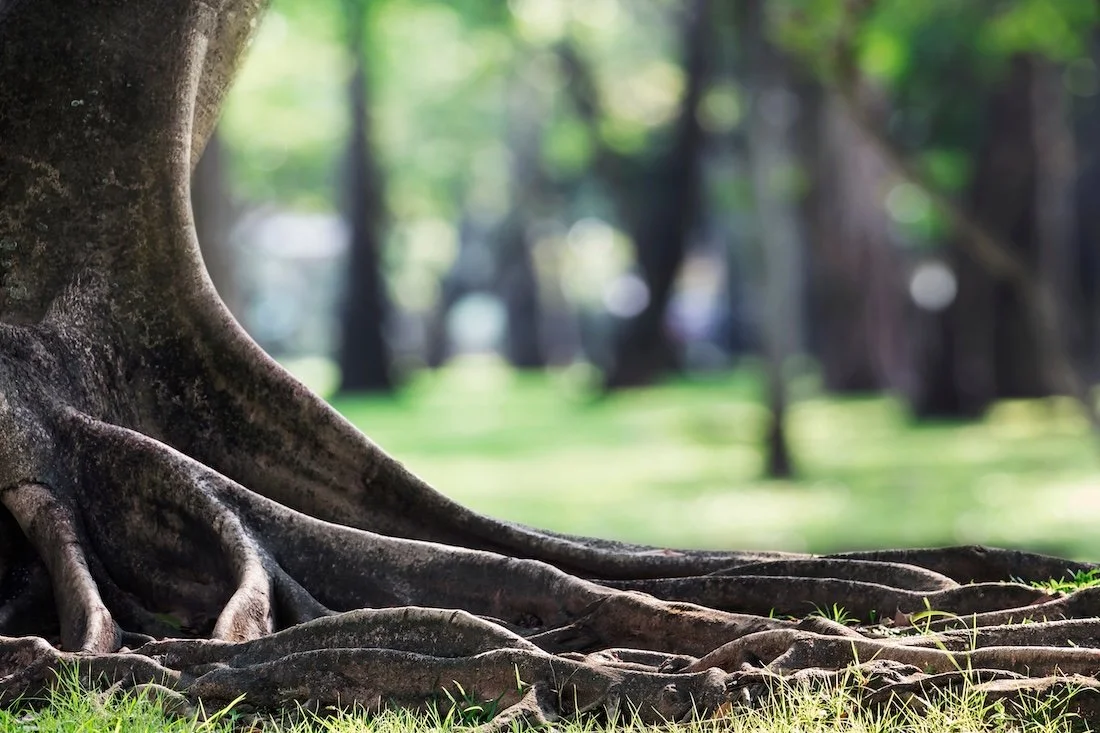
Yes, tree roots can damage your home's foundation. But the way it usually happens isn't what most homeowners picture. It's rarely a root physically forcing its way through solid concrete. More often, the damage is slower and less visible: roots pulling moisture from the soil, causing it to shift, shrink, and leave voids that destabilize the structure above.
Understanding how this actually works makes it easier to assess your own situation and to know when a tree is a genuine risk versus when it's just close to the house.
How Tree Roots Damage Foundations
The Moisture Problem: The More Common Cause
Tree roots are constantly searching for water. When a large tree is planted near a home, its roots can extend well beyond the canopy, often stretching 1.5 to 3 times the height of the tree across the soil. As those roots draw moisture out of the ground, the soil around your foundation begins to dry out and contract.
In Southeast Michigan, where clay-heavy soils are common, this is a significant concern. Clay expands when wet and shrinks when dry. When tree roots pull moisture from clay soil repeatedly over years, the ground beneath a foundation can settle unevenly, leading to cracks, shifts, and structural instability. According to Purdue Extension, this process can cause foundations to settle several inches over the course of a decade in severe cases.
Direct Root Pressure: The Less Common Cause
Roots generally redirect themselves when they encounter a solid object like a concrete foundation or sewer line. They don't bore through intact concrete. But if there's an existing crack, a weakened joint, or a gap in a drainage pipe, roots will find it and grow into it. As the root thickens over time, that crack widens.
This type of direct damage is most likely with older homes that have shallow foundations, or in cases where a root reaches a previously compromised area of the structure.
Trees That Pose the Highest Risk in Southeast Michigan
Not all trees threaten foundations equally. The species most likely to cause problems are those with large, shallow, and aggressively spreading root systems, and several of them are common throughout Livingston and Washtenaw counties.
Tree Species & Why They’re A Risk
Silver Maple
Extremely common in Michigan. Shallow, fast-spreading roots that surface easily and draw heavily from surrounding soil.
Weeping Willow
Notorious for aggressive moisture-seeking roots. Will pursue drainage pipes, sewer lines, and any moisture source near the foundation.
Cottonwood / Hybrid Poplar
Fast-growing with shallow roots. Short-lived but highly disruptive while established.
American Elm
Moisture-hungry roots that frequently invade sewer lines and spread under foundations, causing soil voids.
Trees with deep taproots, like many conifers, pose much less risk. If you're considering new plantings near your home, choosing a species with a slower growth rate and less aggressive root system is worth the research upfront.
Warning Signs That Roots May Be Affecting Your Foundation
Foundation problems from tree roots tend to develop gradually. By the time they're visible, the underlying issue has often been building for years. Here's what to watch for:
Diagonal or horizontal cracks in basement walls or crawl space, especially new cracks or ones that are widening over time
Doors or windows that stick, won't close properly, or have developed gaps in the frame
Visible root lift near sidewalks, patios, or driveways. Also surface roots that are lifting hardscape near the house can indicate the same roots are active beneath it
Uneven or sunken areas of soil close to the foundation, a sign of voids forming underground
Water intrusion in a dry basement or crawl space can indicate soil shifts that are allowing water pathways to form
None of these symptoms by themselves confirm tree root damage. Soil movement, drainage issues, and settling can cause similar signs. But if you have one or more of these alongside a large tree within 20–30 feet of the house, it's worth investigating before the issue compounds.
What to Do If You're Concerned
Don't Remove the Tree Immediately
Tree removal is a last resort, not a first response. Many homeowners with a large tree close to the house have no foundation issues at all, especially if the tree is healthy, the soil drains well, and the foundation is modern and deep. Before making any decisions, get a clear picture of what's actually happening.
Get a Professional Assessment
An experienced arborist can evaluate the tree's root system, its proximity to the structure, and the species' typical growth behavior. A foundation contractor can assess whether any existing cracks or settlement align with root activity or have a different cause. Having both assessments in hand gives you a much clearer picture than either alone.
Consider a Root Barrier
If roots are encroaching but haven't caused serious damage yet, a root barrier, a physical panel installed several feet deep in the soil between the tree and the foundation that can redirect root growth away from the structure. This is most effective when installed before significant damage occurs.
Maintain Consistent Soil Moisture
One of the best protections against moisture-related foundation damage is keeping the soil around your foundation consistently watered during dry Michigan summers. When the ground stays hydrated, roots are less likely to draw aggressively from directly beneath the structure. This won't eliminate risk from a problematic tree, but it reduces the soil contraction cycle that causes the most damage.
When Removal Is the Right Call
If a tree is large, close to the house, of a high-risk species, and showing signs of structural decline, or if foundation damage is already confirmed, removal may be the most responsible option. A dead or structurally compromised tree near a foundation is both a liability and an accelerating problem. Getting it down before it falls or the root damage worsens is almost always less costly than dealing with the aftermath.
Frequently Asked Questions
How close is too close for a tree to a foundation?
For most trees, a minimum of 10 feet from the foundation is a general starting point. For species with aggressive or wide-spreading root systems (silver maple, willow, cottonwood) 25 to 50 feet is a more appropriate distance. The key variable is the mature size of the tree: larger trees need more clearance.
Can tree roots grow through a concrete foundation?
Healthy, intact concrete is generally too hard for roots to penetrate on their own. Roots typically redirect around solid objects. The risk comes when there's an existing crack, joint failure, or weakened area. Roots will find those openings and, as they thicken, widen them over time. This is why older homes with shallow or aging foundations face more risk than newer construction.
Should I remove a tree that's close to my foundation?
Not necessarily. Many trees planted near homes cause no foundation problems over their lifetime. Removal should be based on a combination of factors: the species, the tree's size and health, the foundation type and age, and whether any actual damage or warning signs are present. An arborist assessment is the most reliable way to determine whether removal is warranted.
Do tree roots damage sewer lines the same way they damage foundations?
The mechanism is similar but more direct. Roots enter sewer lines through small cracks or joint gaps, drawn in by the moisture and nutrients inside the pipe. Once inside, they grow and eventually block or break the line entirely. Silver maple, willow, and elm are the species most frequently associated with sewer line intrusion in Southeast Michigan.
What's the difference between foundation damage from roots and normal settling?
Both can cause similar symptoms: cracks, uneven floors, sticking doors. The distinction is usually made by looking at the pattern and location of damage alongside the tree's proximity and root behavior. An arborist and a foundation contractor assessing together can typically determine whether roots are a contributing factor or whether settling has another cause.
If you have a large tree near your home and aren't sure whether it poses a risk, Martin Tree Service can take a look. We serve homeowners across Brighton, Howell, Ann Arbor, and the surrounding area and have been doing this work for over eight years. We'll give you a straight assessment, and if removal isn't necessary, we'll tell you that too.
Schedule a free assessment or call (517) 295-1155.