
The Benefits of Regular Tree Trimming
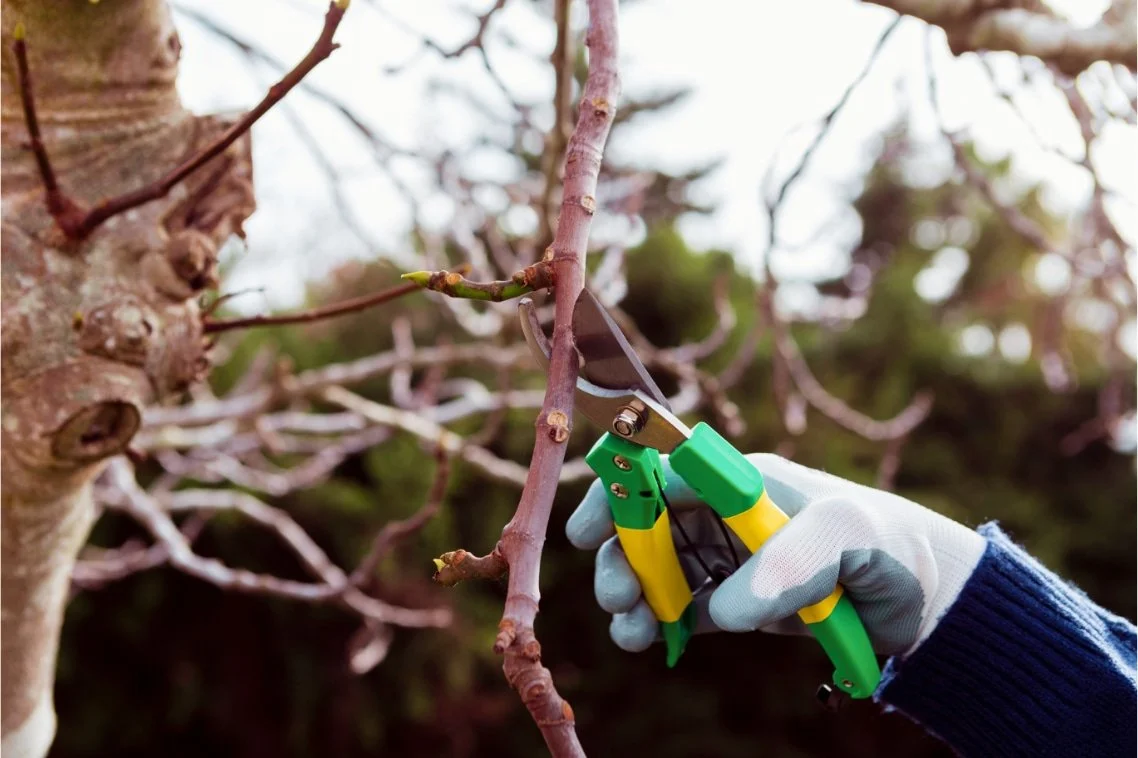
What are the benefits of regular tree trimming?
Regular tree trimming improves tree health, lowers the risk of storm damage, prevents disease spread, protects nearby structures, and meaningfully increases property value. In Michigan, properly timed pruning also reduces the chance of oak wilt and emerald ash borer spread, both of which have been confirmed in Livingston County. USDA Forest Service research shows that mature, well-maintained trees add measurable value to a home's sale price and reduce time on market.
Most homeowners only think about calling a tree service after a branch is already on the roof. The case for routine pruning works the other way: a few hundred dollars of preventative work every two to three years almost always costs less than a single emergency removal after a storm.
Below are the seven outcomes you actually pay for when you hire a professional crew to prune your trees on a schedule.
1. Trimming Directs Growth and Builds Long-Term Structural Strength
Every tree in your yard is solving the same problem: how to capture as much sunlight as possible without falling over. Left alone, most species produce more wood than they need, with weak branch unions, co-dominant leaders, and crossing limbs that abrade each other's bark. Those defects compound over decades.
A trained arborist following the American National Standards Institute A300 pruning standard removes the limbs working against the tree, not the ones easiest to reach. Cuts are placed at the branch collar so the wound seals properly, and no more than 25 percent of live canopy is removed in a single year, which is the National Tree Authorities published threshold to avoid stressing the tree.
What you get over a five to ten year pruning cycle is a tree with a single dominant trunk, well-spaced scaffold branches, and tight unions that hold weight without splitting. That structure matters most when an ice storm rolls through Howell or a 60 mph thunderstorm cell drops over Brighton. Trees with sound structure lose small twigs in those events. Trees with neglected structure lose entire limbs, sometimes through the roof.
2. Properly Pruned Trees Survive Michigan Storms
The National Weather Service office in Detroit/Pontiac routinely issues dozens of severe thunderstorm warnings each year for southeast Michigan, in addition to winter ice and wet-snow events that often cause widespread cumulative tree damage. Trees weakened during one storm event may fail later during subsequent wind, snow, or ice events, contributing to ongoing property damage and cleanup costs documented in urban forestry research.
Pruning reduces sail, meaning the surface area of the canopy that catches wind, and removes the dead wood, weakly attached limbs, and crossing branches that fail first. According to Penn State Extension's guidance on helping trees recover after storms, trees with proper structure and sound branch unions are far less likely to suffer major limb loss under the same ice load than neglected trees in the same area.
For Livingston County homeowners with mature silver maples, one of the most failure-prone species in the area due to fast growth and brittle wood, routine pruning is not cosmetic. It is the cheapest insurance policy on the property. If storm damage has already occurred, our storm damage cleanup team is available for rapid response.
3. Pruning Prevents Disease, With Two Michigan-Specific Watch-Outs
Pruning cuts are open wounds. Healthy trees seal those wounds quickly. The complication is that some pathogens spread through fresh cuts, which is why timing matters in Michigan more than it does in most of the country.
Oak wilt, caused by the fungus Bretziella fagacearum, is confirmed in Livingston, Washtenaw, Oakland, and most surrounding counties. Once an oak is infected, red oak species typically die within a single growing season. The disease spreads through sap-feeding beetles attracted to fresh wounds. The Michigan DNR advises against all oak pruning between April 15 and July 15, when the beetles are most active. Any wound on an oak during that window should be sealed with pruning paint within minutes. Our oak tree trimming service is scheduled specifically around this window.
The invasive emerald ash borer has spread across Michigan, leaving many ash trees weakened or dead as the canopy deteriorates first. Pruning a stressed ash speeds its decline and is rarely advisable. A professional arborist can tell you whether your remaining ash trees are candidates for trunk injection treatment or removal.
For non-oak hardwoods such as maple, beech, hickory, birch, and walnut, routine trimming is one of the best disease-prevention tools available. Removing infected limbs early, before fungi or bacteria reach the trunk, often saves the tree entirely.
4. Trimming Removes Hazards Before They Become Accidents
Most yard injuries from trees are not dramatic. They are low limbs that catch a homeowner at eye-level on the riding mower, dead branches that drop onto a parked car, and weak unions that fail under a child's swing rope. Routine trimming removes those hazards on a schedule, before an accident forces the issue.
A professional pruning visit is also a free hazard inspection. Professional arborists are trained to spot indicators of root decay, internal trunk cavities, crown dieback, and hidden splits during routine work. The Tree Care Industry Association recommends a basic visual tree risk assessment at least once a year for any tree close enough to fall on a structure. A trimming appointment is the natural time for that assessment to happen.
If a hazard is already present, visit our blog for more tree care guidance and contact us before the next storm makes the decision for you.
5. Well-Pruned Trees Raise Home Value and Lower Energy Bills
This is the benefit that surprises most homeowners. The numbers are not small. The Hedonic property price model study of urban tree cover and home values found that tree cover within 100–250 meters significantly increases home sale prices. A 10% increase in nearby tree cover increased home values by $836 to $1,371 depending on distance.
Energy savings are the other line item. The U.S. Department of Energy reports that carefully positioned trees can save up to 25 percent of a typical home's energy use. Routine pruning keeps the trees doing their job rather than creating liability.
6. Pruning Protects Roofs, Siding, Foundations, and Utilities
Tree branches that grow into a roof do not just look bad. They abrade asphalt shingles, lift flashing, dump leaf litter into gutters, and create a moisture-trapping mat against siding that accelerates rot. Roots present a slower version of the same problem. Aggressive root systems from species like silver maple, willow, and poplar can crack sidewalks, lift driveways, and infiltrate clay drain tile.
Routine canopy reduction keeps branches a safe distance from the house, typically six to ten feet for a mature tree. An arborist can flag root-conflict trees that should be considered for removal before they damage a foundation or sewer lateral. Many older Livingston County homes still have clay drain tile that is highly vulnerable to root infiltration. A camera scope on the line costs a fraction of a full replacement.
Branches over service drops, meaning the wire running from the utility pole to the house, are a special category. DTE Energy and Consumers Energy will trim around their own primary lines, but the service drop is the homeowner's responsibility. Our tree service crews carry the right insurance and equipment for that work across Brighton, Howell, Pinckney, Ann Arbor and the surrounding communities. Tree Service | Get Expert Care Now
7. Selective Pruning Improves Fruit and Flower Production
For ornamental and fruit-bearing trees, pruning is not optional. It is the single biggest variable in how much fruit a tree produces and how good it looks in bloom.
Apple, pear, and cherry trees set the following year's fruit buds on shoots that receive adequate sunlight. An unpruned apple tree shades its own interior, fruit bud formation stops on the inner branches, and within a few seasons the entire crop is concentrated on the outer ten percent of the canopy. According to Michigan State University Extension, the best time for pruning fruit trees is January through March, before buds open, with most species benefiting from annual dormant pruning in that window.
Ornamental flowering trees such as crabapple, dogwood, magnolia, and redbud follow a different rule: prune spring bloomers immediately after they finish flowering, and prune summer bloomers in late winter. Request a free estimate to get your fruit and ornamental trees on the right pruning calendar.
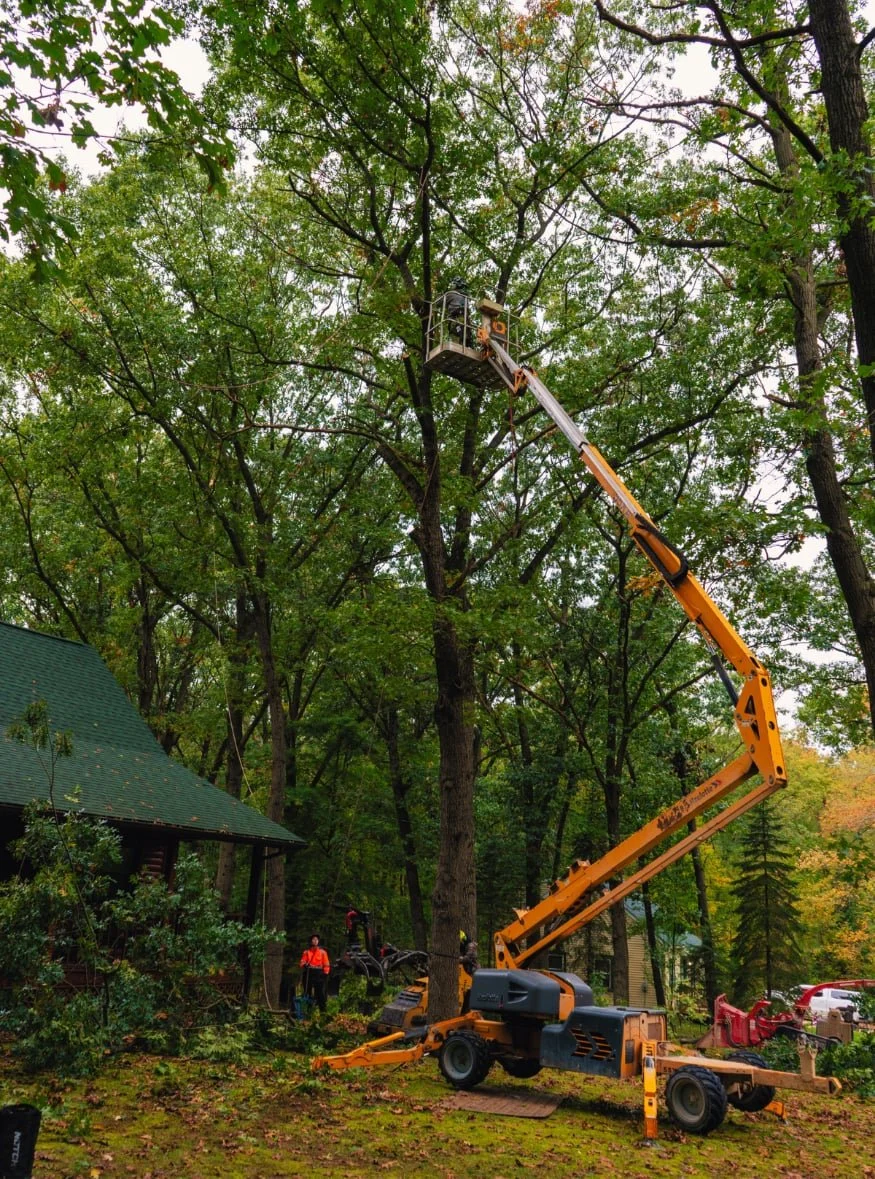
Why a Professional Makes the Difference
Tree trimming is one of the easiest jobs to do badly. Topping a tree, which means cutting all major branches back to stubs, is still practiced in some neighborhoods and is condemned by every major arboriculture organization. Topping is problematic because it removes too much canopy at once, triggers a flush of weak watersprouts, creates entry points for decay, and shortens the life of the tree.
Safety data collected by the Bureau of Labor Statistics highlights tree trimming and pruning as one of the more dangerous types of field work in the U.S., with falls and cutting equipment accounting for most severe incidents.In practice, this makes insurance and certification essential markers of a qualified provider. General liability coverage and full workers’ compensation should all be standard for reputable Michigan tree care companies.
You can read our 500 or more verified reviews on our Google profile and learn more about our crew before scheduling. Our tree trimming guidelines page covers the standards we follow on every job.
Schedule a Trimming Visit for Your Livingston County Property
Most mature hardwoods benefit from a professional pruning visit every three to five years. Younger trees, fruit trees, and high-target trees near structures should be on a shorter cycle. Martin Tree Service provides scheduled pruning, storm cleanup, and tree health inspections across Howell, Brighton, Hartland, Pinckney, Fowlerville, Ann Arbor, and the rest of Livingston County. Every crew follows ANSI A300 pruning standards. Request a free estimate or call us at (517) 295-1155.
Frequently Asked Questions
How often should trees be trimmed in Michigan?
Most mature shade trees need a professional pruning visit every three to five years. Young trees benefit from structural pruning every one to two years. Fruit trees need annual dormant pruning. Trees within reach of a structure or power line should be inspected at least once a year. See our FAQs page for more on maintenance schedules.
What is the best time of year to prune trees in Michigan?
For most hardwoods, late winter through early spring, roughly February to early April before bud break, is ideal. Two important exceptions: do not prune oaks between April 15 and July 15 because of oak wilt risk, and do not prune spring-blooming ornamentals until after they finish flowering. Our oak tree trimming service is scheduled specifically around the DNR's recommended window.
Can I prune oak trees in summer?
Generally no, not in Livingston County. The Michigan DNR advises against all oak pruning between April 15 and July 15, when the sap-feeding beetles that transmit oak wilt are most active. If an oak suffers storm damage during that window, seal the wound with pruning paint within 10 to 15 minutes. Save planned oak pruning for the dormant season.
How much does professional tree trimming cost in Livingston County?
Small to medium yard trees generally fall in the $150 to $500 range per visit. Large mature trees requiring bucket truck or climbing work typically run $400 to $1,200. Always get a written estimate specifying which trees and which cuts are included. Request a free estimate from our team.
Will pruning hurt my tree?
Done properly, no. Done improperly, yes. Most experts recommend removing no more than 25 percent of live canopy in a single year, placing cuts at the branch collar rather than flush with the trunk, and never topping the tree. A trained arborist following ANSI A300 standards causes minimal stress and often extends the tree's lifespan.
What is the difference between tree trimming and tree pruning?
In professional arboriculture, the two terms are used almost interchangeably. What matters more is whether the work follows ANSI A300 pruning standards, which is the industry's published technical specification for tree care.
Can I trim my own trees?
You can prune small branches reachable safely from the ground with hand tools. For anything overhead, anything over six inches in diameter, or anything near a power line, hire a professional crew. Call us at (517) 295-1155 or request a free estimate.
Does homeowners’ insurance cover tree trimming?
In most cases, no. Routine maintenance is the homeowner's responsibility. Insurance generally covers removal only when a tree has fallen on a covered structure, typically with a cap of $500 to $1,500 per tree. Our emergency tree removal team can provide written documentation for insurance claims when storm damage does occur.
