
Commercial Stump Grinding for Multi-Unit Properties
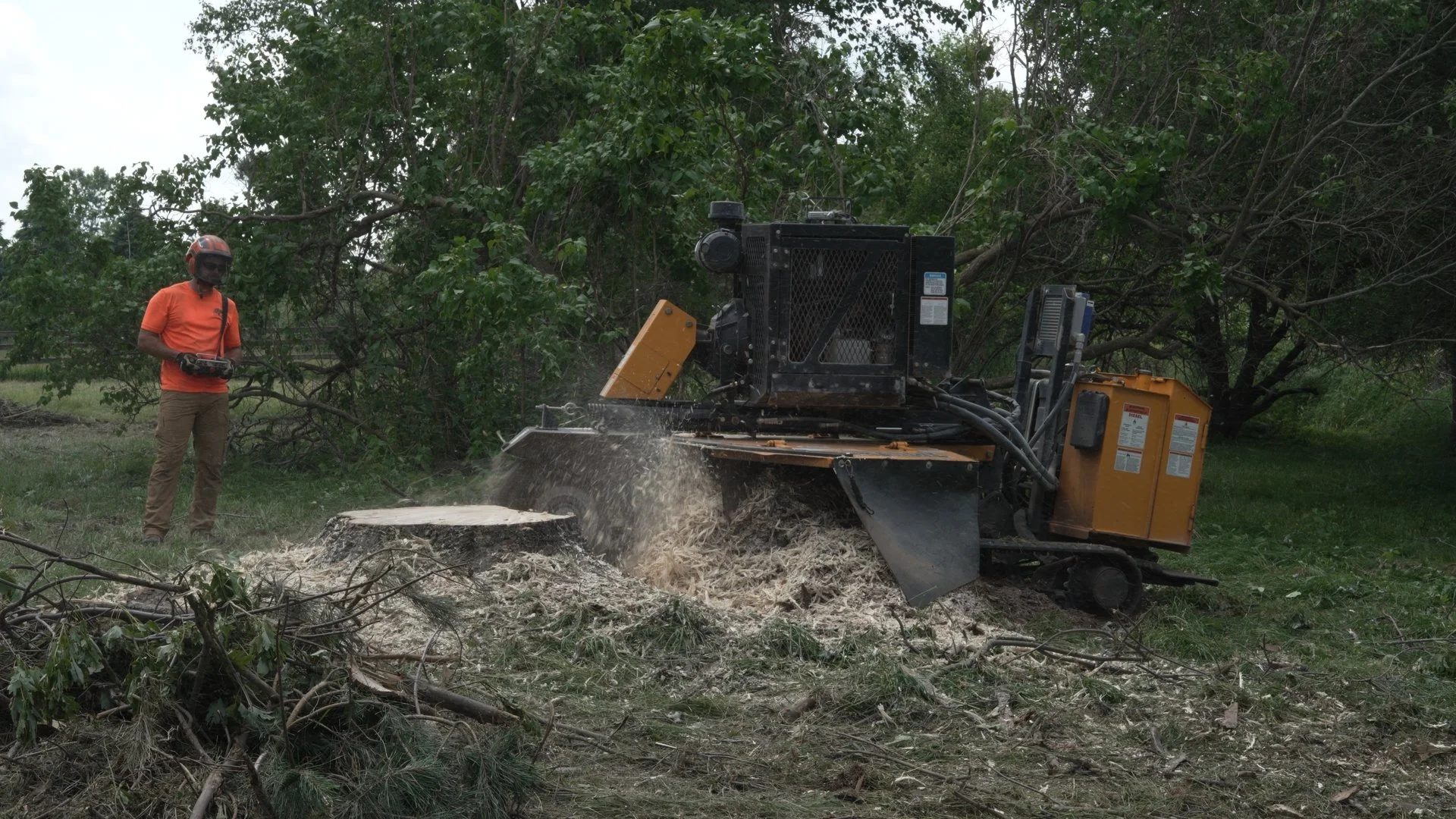
Commercial stump grinding covers the same basic process as residential stump grinding, shredding a stump below grade with specialized equipment, but the planning looks different when you're dealing with multiple stumps spread across a property instead of one in a backyard. Scheduling, access, and liability all work differently for an apartment complex, HOA, or commercial lot than they do for a single homeowner.
If you manage a multi-unit or commercial property in Livingston or Washtenaw County, here's what changes when stump grinding is a property-wide job instead of a one-off.
Why Multiple Stumps Change the Job
A homeowner with one stump is usually solving a mowing annoyance. A property manager with stumps scattered across a parking lot island, a common green space, and a few unit yards is managing something closer to a standing liability list. Every stump left in place is a tripping hazard in a space where dozens or hundreds of people walk regularly, not just one household.
There's also a health angle that compounds with tree count. Decaying stumps can host wood-decay fungi that spread through root contact to nearby healthy trees. The University of Minnesota Extension notes that the fungus behind Armillaria root rot produces rhizomorphs, root-like strands that can spread up to 10 feet from an infected stump to a neighboring tree's root system. On a property with dozens of trees planted close together, one neglected stump is a slower-moving risk to the rest of the landscaping investment, not just an eyesore.
Scheduling Around Volume, Not Just Size
Residential stump grinding is usually quoted per stump. On a commercial property, the more useful question is total volume across the site: how many stumps, how spread out they are, and how much equipment repositioning is involved between them.
Grouping stumps into a single scheduled visit is almost always more efficient than calling every time one comes up. If your property has ongoing tree work, consider a periodic stump sweep instead. One visit can handle everything that's accumulated since the last one. This keeps hazards from slowly piling up between individual tree removals.
Access and Timing Considerations Unique to Commercial Sites
Getting equipment to a backyard stump is usually straightforward. Getting a grinder to a stump in a courtyard, behind a leasing office, or across a lawn with active foot traffic takes more planning.
Timing also matters more on an occupied property. Grinding is loud and throws debris, which is worth scheduling around move-in days, resident events, or business hours if the stump is near an entrance or a space that's actively used. A short heads-up notice to residents or tenants goes a long way toward avoiding complaints about noise or a blocked walkway on the day of the work.
The Liability Risk Behind a Neglected Stump
For a homeowner, a stump is a personal inconvenience. For a property manager, it's a documented condition on a property where premises liability applies. If someone trips over a stump in a common area and it can be shown that the property was aware of the hazard, that's a very different conversation than an accident on private residential property.
Addressing stumps proactively, rather than waiting for a complaint or an incident, is the more defensible position and generally the cheaper one. A scheduled grinding visit costs far less than the time and liability exposure of an unaddressed hazard sitting in a common area for months.
What to Expect From a Commercial Stump Grinding Visit
Site walk and stump count. The crew maps out every stump on the property, not just the one that prompted the call, so nothing gets missed on a return trip.
Access and scheduling plan. Equipment routes, timing around tenant activity, and any areas needing extra care (irrigation lines, hardscaping, parking) get worked out before the crew arrives.
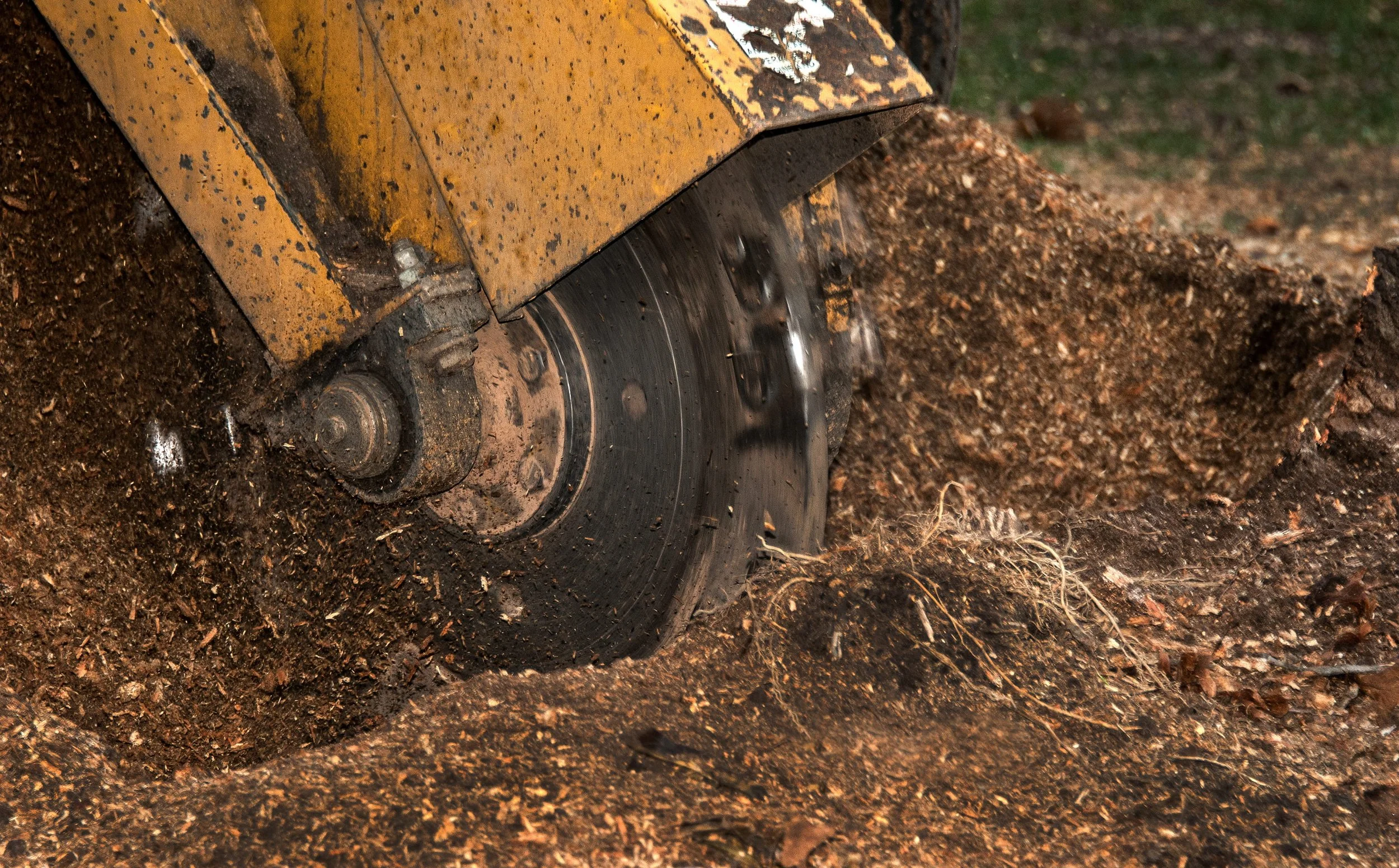
Grinding. Each stump is ground to the appropriate depth for its location, deeper near planting beds or turf that will be reseeded, less critical in mulched or unused areas.
Cleanup and debris handling. Wood chips are cleared from common areas and walkways as part of the visit, not left for maintenance staff to deal with afterward.
Documentation. A record of the work completed is useful for your own property files, particularly if any of the stumps were tied to a liability concern.
Frequently Asked Questions
How is commercial stump grinding priced differently than residential? Residential jobs are typically quoted per stump. Commercial and multi-unit properties are usually quoted based on total volume and site complexity, since access, number of stumps, and scheduling around an occupied property all factor into the job more than any single stump's size.
Can stump grinding be scheduled around business hours or resident activity? Yes, and it's worth requesting. Grinding is loud and produces debris, so timing it around move-in days, business hours, or high-traffic periods on the property helps avoid complaints and keeps common areas usable.
Who is liable if someone trips over a stump on a commercial property? Property owners and managers can be held responsible for hazards they knew about and didn't address, which is part of why proactively grinding stumps in common areas is the more defensible approach compared to waiting for a complaint.
Do multiple stumps need to be handled all at once? Not necessarily, but grouping them into a single scheduled visit is usually more efficient than calling separately for each one, especially if your property has ongoing tree work generating new stumps periodically.
Does stump grinding disrupt landscaping or parking on the property? Access needs vary by location, but a planned visit accounts for this ahead of time. Areas near parking or walkways can typically be scheduled for lower-traffic times to minimize disruption.
Managing stumps across a property? Request a commercial estimate from Martin Tree Service, serving Brighton, Howell, Dexter, Pinckney, Fowlerville, Highland, Hamburg, and Ann Arbor.
