Can Cabling and Bracing Save a Weak Tree?
Cabling and bracing can save a tree that would otherwise need to come down by reinforcing a weak branch union, split trunk, or competing multiple trunks instead of removing the tree entirely. It's a support system, not a repair, so it works best on a tree that's structurally weak but not yet decayed or unsound.
For a lot of mature trees, especially ones with real shade, privacy, or sentimental value, this is the option that gets skipped simply because most homeowners don't know it exists. Here's what cabling and bracing actually looks like, which trees are good candidates, and when removal is still the better call.
Fall is also the practical time to address it. Heavy snow and ice add real weight to a canopy, and a weak union that's barely holding on in October can fail outright under a winter storm load. Getting a support system installed before then means it's already doing its job when the season's hardest tests arrive.
What Can Cabling and Bracing Do?
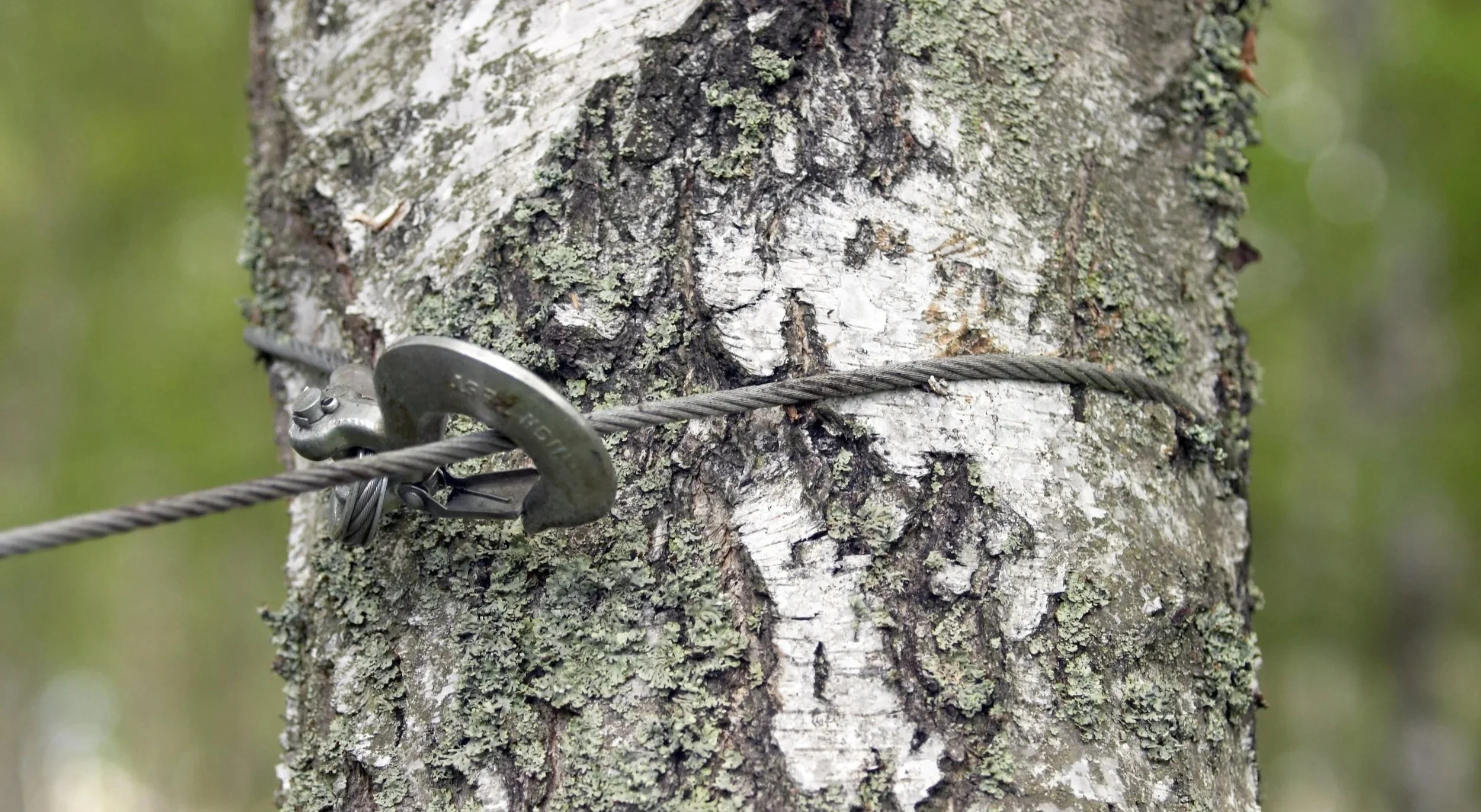
Cabling involves installing steel cable in the upper third of the canopy, connecting two major limbs or stems so they can't spread apart or move independently under wind load. A brace is different: it's a threaded rod drilled directly through a trunk or a major union to hold the wood together at a fixed point, typically used where a tree has codominant stems, meaning two main trunks growing from roughly the same spot. According to Purdue University, braces reduce the risk of these stems spreading apart or shifting sideways relative to each other, and cabling and bracing are frequently combined to achieve the most stable result. Purdue also notes that beyond traditional steel systems, dynamic cabling using flexible synthetic materials offers a less invasive alternative that allows more natural movement in the canopy while still limiting how far a weak union can spread.
Which type fits depends on the tree. A severely compromised union that needs to be restricted calls for a more rigid, static system. A union that's weak but not critical often does better with a dynamic system, since it puts less concentrated stress on any single point. That distinction is part of what a structural assessment sorts out.
Which Trees Are Good Candidates
The clearest case for cabling or bracing is a tree with large, heavy limbs or multiple competing trunks that are otherwise healthy. A tree with a tight, V-shaped union between two major stems is carrying a structural weak point that a support system can offset. Purdue notes that codominant stems, sometimes called V-crotch branch unions, are structurally weak compared to a single dominant stem, and that the likelihood of failure increases when the union also includes what's called included bark, where bark gets pinched between the two stems instead of forming a strong, solid connection. An included bark union looks fine from the outside, but it's structurally one of the weaker points a tree can have.
A mature tree that's lost a large limb in the past and shows signs of stress at the remaining unions is another common candidate, as is a tree with a heavy, spreading limb positioned over a driveway, patio, or structure where failure would cause real damage.
What these trees have in common is that the wood itself is still sound. Cabling and bracing reinforces a structural weakness. It doesn't fix decayed or rotten wood.
The Limits of Cabling and Bracing
This isn't a fix for every at-risk tree. Significant internal decay, extensive rot at the base or major unions, or a trunk that's already cracked through can mean the wood itself is too compromised for hardware to help. A tree with root rot from decay fungi like Armillaria, a fungus that can spread from an old stump, falls into this category. Once that kind of decay has taken hold, the wood at the base often can't reliably hold hardware, and removal is the safer call rather than a support system that just delays an eventual failure. In those cases, an honest assessment will point toward removal instead. Even on a tree that does qualify, this still isn't something to install yourself.
Why This Isn't a DIY Project
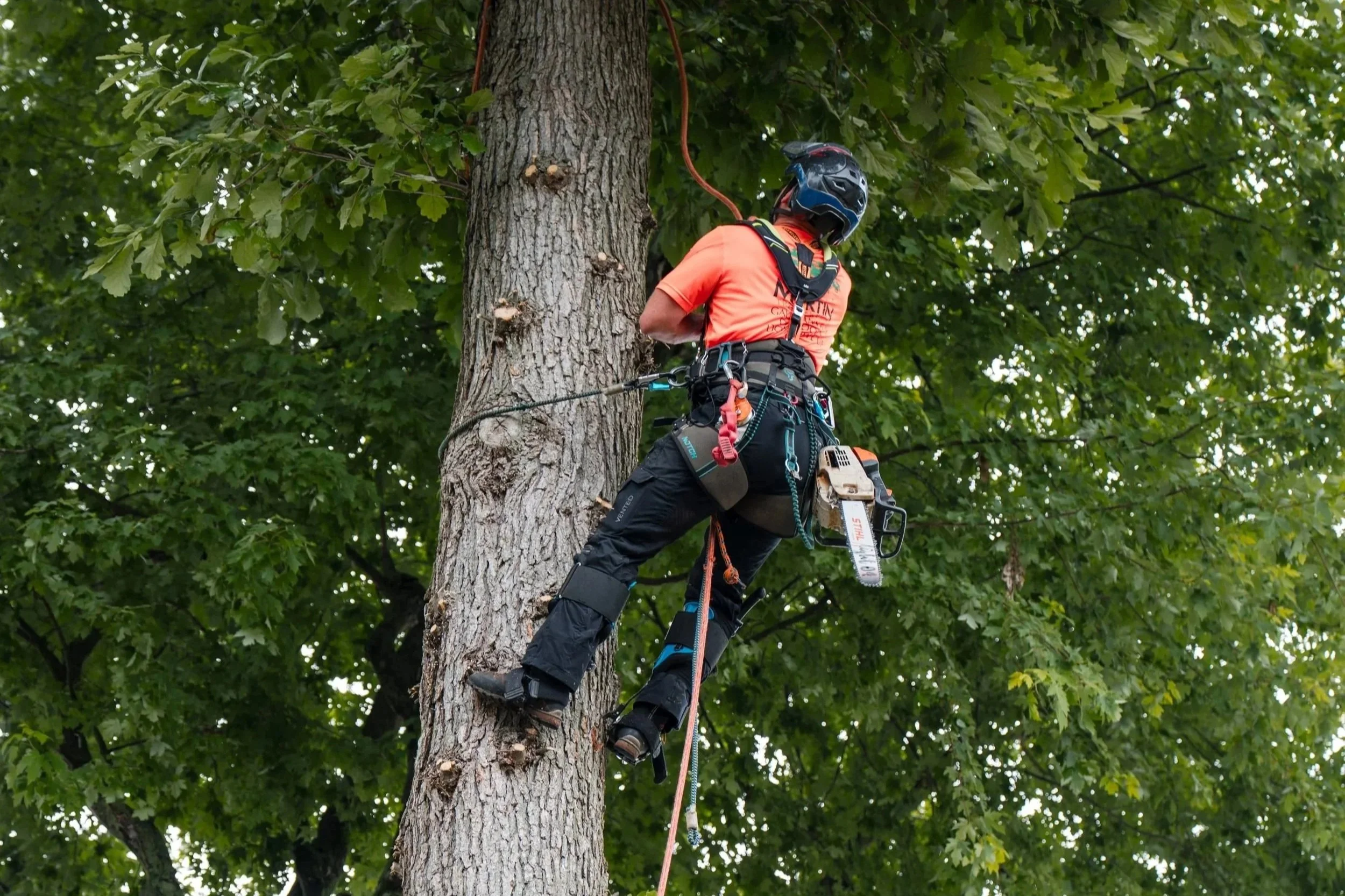
Installing cables and braces means climbing into the upper canopy and correctly identifying which unions actually need support and which don't. Getting that assessment wrong in either direction is a problem. Under-supporting a genuinely weak union leaves the risk in place. Over-supporting a tree that didn't need it adds unnecessary hardware and cost. On top of the assessment itself, the work happens high in the tree, which is exactly the kind of climbing and rigging that requires training most homeowners don't have. That’s why every job starts with a professional evaluation.
What to Expect From a Structural Assessment
A visit starts with an evaluation of the tree's overall structure: trunk condition, union angles, canopy weight distribution, and any past damage. If pruning is recommended first, that typically happens before hardware goes in, since reducing weight in the canopy takes some of the stress off a weak union before it's reinforced. From there, the crew determines whether cabling, bracing, or both make sense, and installs the appropriate hardware high in the canopy or through the affected union.
How Long a Support System Lasts
Cabling and bracing isn't a one-time, forget-about-it fix. Hardware should be checked periodically as part of routine tree maintenance, since a tree keeps growing and moving around the support system over time. A tree with cabling or bracing installed is a good candidate for a regular inspection schedule rather than a one-and-done visit.
Frequently Asked Questions
What's the difference between cabling and bracing? Cabling uses steel cable installed high in the canopy to limit how far apart two major limbs or stems can move. Bracing uses rigid threaded rods drilled through a trunk or union to hold the wood together at a fixed point. They're often used together on the same tree.
Will cabling and bracing hurt my tree? When installed correctly, no. The hardware is placed to reinforce an existing structural weakness, not to alter the tree's health. Improper installation, or installing it in a tree that isn't actually a good candidate, is where problems come from, which is why this isn't a DIY job.
How do I know if my tree needs cabling and bracing instead of removal? It comes down to whether the wood itself is sound. A tree with a structural weak point, like a tight V-shaped union or competing trunks, but no major decay is usually a good candidate. A tree with significant internal rot or a cracked trunk is generally past the point where hardware helps.
Does cabling and bracing require regular maintenance? Yes. Hardware should be checked periodically since the tree continues to grow and shift around the support system. A tree with an installed system is worth adding to a regular inspection schedule.
Can any tree be cabled or braced? No. The tree needs to have fundamentally sound wood at the point of support. Cabling and bracing reinforces a structural weakness in otherwise healthy wood. It isn't a solution for decay, rot, or a trunk that's already failing.
What's the difference between static and dynamic cabling? Static systems use steel cable and require drilling into the tree, holding a weak union fairly rigidly in place. Dynamic systems use flexible synthetic materials that allow more natural movement in the canopy while still limiting how far a weak union can spread. Which one fits depends on the tree and the severity of the issue.
Does a tree need pruning before cabling or bracing? Sometimes. If a canopy is carrying more weight than the union can safely support, reducing that weight through pruning can take some of the stress off before hardware is installed. Whether that's needed depends on the specific tree.
Have a tree with a structural concern? Request a structural assessment from Martin Tree Service, serving Brighton, Howell, Dexter, Pinckney, Fowlerville, Highland, Whitmore Lake, Hamburg, and Ann Arbor, or call us at (517) 295-1155.
